Latin America
Leigh Phillips tells the story of Cybersyn, Chile’s experiment in non-centralised economic planning which was cut short by the 1973 coup
When General Pinochet overthrew Salvador Allende’s left-wing government in Chile, Mike Gatehouse was among the thousands of activists arrested. On the 40th anniversary of the coup he describes the hope and then the horror of the time
The scale of the protests rocking Brazil took everyone by surprise - even the demonstrators themselves. Sue Branford and Hilary Wainwright investigate where they came from and where are they going
Matthew Richmond writes on Brazil's growing mass movement
As host of the World Cup in 2014 and the Olympics in 2016, the Brazilian government is trying to ‘pacify’ the gangs in Rio’s favelas. But, Mike Davis reports, the needs of the favelados have taken a back seat
Jeffrey R Webber looks at the myths and the realities of the late Hugo Chávez’s impact on Venezuela, and considers the challenges ahead
The death of Hugo Chávez is a fundamental test for the Boliviarian Revolution, writes Uruguayan anthropologist Daniel Chavez
As the forces of reaction get ready to step up their offensive while trying their best to conceal their delight at Chávez’s death, Pablo Navarrete remembers his true legacy
Mike Aiken reports from the mountain community of Cherán which in 2011 responded to government inaction over illegal logging by setting up barricades and establishing their own autonomous local democracy
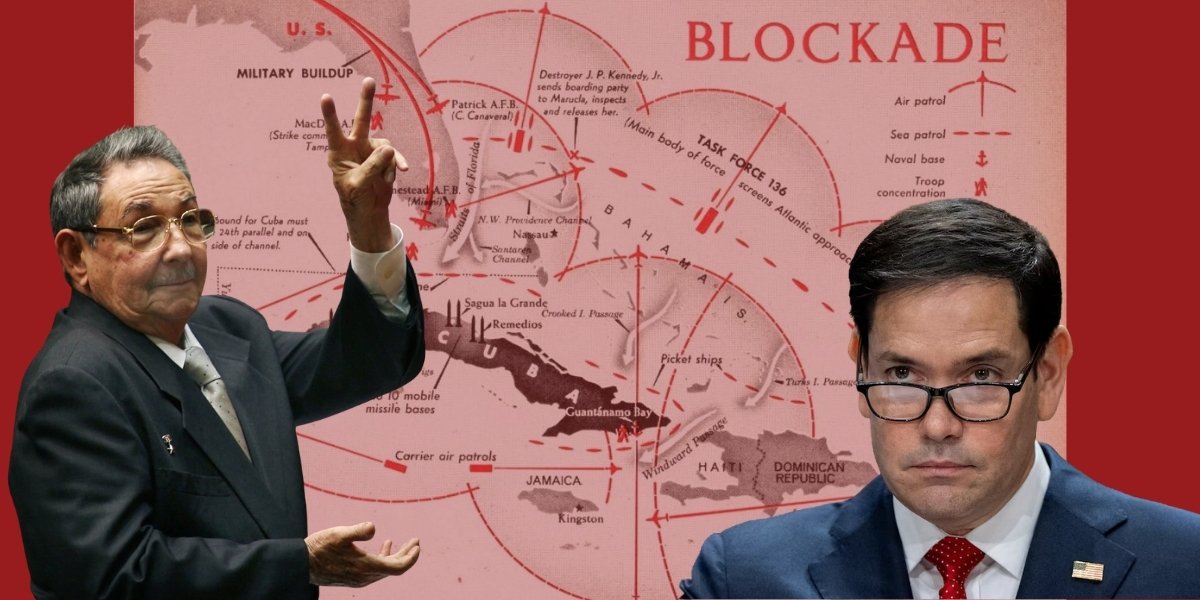
Fifty years ago this month the world came close to nuclear Armageddon. Paul Anderson looks back at the Cuban missile crisis and anti-nuclear campaigning since
Francisco Dominguez examines the background to the overthrow of the legitimate president of Paraguay, Fernando Lugo, and calls for the restoration of democratic rule
Francesca Fiorentini looks back at the social movements that emerged from Argentina’s debt crisis a decade ago and asks what we can learn for today’s struggles
Jody McIntyre and Pablo Navarrete report on Venezuela’s Hip Hop Revolución movement
Stephen Wilkinson asks what transforming Cuba’s economy will mean. Below, Sandra Lewis responds
Sue Branford looks at Brazil’s unsustainable development – and the potential for a new direction
As student protests continue to rock Chile's neoliberal consensus, Roberto Navarrete sets the revolt in context
Maria Felix and Siobhan McGuirk report on the growing protest backlash against the war on drugs in Mexico.
Two articles exploring current developments in Venezuela are introduced by Red Pepper's Latin America editor Pablo Navarrete.
Jennie Bremner on the positive example provided by Venezuela and the need for solidarity.
An interview with Edgardo Lander.
Maria Luisa Regalado profiles the Honduran feminist workers’ organisation Codemuh and its role in the civil society resistance to the 2009 coup
Behind the bloody headlines of Mexico’s war on drugs, creeping militarism and corruption is silencing public dissent. Government policy failures are leading to social breakdown, writes Siobhan McGuirk with Maria Felix
Leah Gordon documents Haiti's unique and political Mardi Gras tradition
‘Disaster capitalism’ got a hold in Haiti, says Gary Dunion
Victor Figueroa Clark talks to Hugo Blanco, an ecosocialist and indigenous activist from Peru
Sue Branford asks what Lula has delivered in his eight years in power
Mike Geddes argues we can learn from the Bolivian experiences of working in and against the state
Bertie Russell is sceptical as to whether states can ever be used to move beyond capitalism
Oliver Stone's new documentary chronicles the emergence of progressive governments in Latin America. Roberto Navarrete talks to him and Tariq Ali, one of the film's scriptwriters.
Samuel Grove reviews South of the Border, directed by Oliver Stone
Foreign bases have been a mainstay of global US military domination for decades. But in Latin America they have been closing fast and a new deal to use seven Colombian military bases is, paradoxically, a sign of US weakness in the region, writes Grace Livingstone
Alex Kawakami is an agronomist and activist with Brazil's Landless Rural Workers' Movement (MST). James O'Nions spoke to him about how the MST organises and its vision of 'agroecology'
While international debate focuses on President Chávez, institutions of popular democracy are taking root in Venezuela's barrios. Pablo Navarrete introduces the importance of community councils, while Steve Ellner assesses their prospects for deepening the 'Bolivarian revolution'
James O'Nions says the tragedy of Haiti doesn't just lie with the recent earthquake
Benjamin Dangl on disaster capitalism in Washington's backyard
James Wilde says there are signs that finally the US may be exerting its considerable influence on the Honduran establishment
As president Manuel Zelaya urges supporters to march, the Honduran junta ban protests and suspend other civil rights
Film-maker Oscar Estrada's observations on resistance in Honduras
Juan Almendares reports on the growing resistance movement to the Honduras coup
James Wilde says civil war is now looking inevitable
James Wilde reports from Tegucigalpa, Honduras (Wednesday 23 September)
Derek Wall reviews Pablo Navarrete's new documentary
James Wilde reports from Honduras
Peace worker James Wilde describes the situation in Honduras
If Obama's government wants to send a powerful message about the sincerity behind the US rhetoric on liberty, democracy, and respect for the rule of law, it needs to accompany words with actions says Victor Figueroa-Clark and Pablo Navarrete
Helen Yaffe explores impact of Che Guevara as an economist and politician
How far do Barak Obama's policies point to a real change in US/Latin American relations asks Grace Livingstone
The movement of landless workers in Brazil is unique in resisting co-option by the Lula government and has retained an impressive self-reliance and independent politics. For Sue Branford it is a beacon for the left worldwide. Here she explains why
Bolivia's experiment with economic and political democracy needs our
solidarity and also contains much from which we can learn. Samuel Grove and Pablo Navarrete report
Manu Chao could be the most famous singer that many English speakers have never heard of. Yet he is to the alter-globalisation movement what Bob Dylan was to peace and civil rights in the 1960s. Oscar Reyes caught up with him by a campfire at Glastonbury, where he created a little 'neighbourhood of hope'
Cuba's not my idea of socialism, says Dave Osler in his retort to Diana Raby
NUJ general secretary Jeremy Dear says the British government must reverse its support for the Uribe government and work with other European powers to help find a peaceful and just solution to Colombia's civil war
Diana Raby responds to Dave Osler
Dave Osler responds to Diana Raby and says it's unforgivable to utilise the slogans of Seattle in describing Cuba
Diana Raby argues that those who deny the legitimacy of the Cuban system will never understand why, after 50 years, the revolution is still an ongoing reality
Colombia's long-running civil war spilled over the border to Ecuador in a raid against FARC guerrillas in March. Gerard Coffey reports on the aftermath
The defeat of President Hugo Chávez's constitutional reform proposals in December's referendum has triggered a wide debate on the Venezuelan left about the next steps in the country's Bolivarian revolution. Here, two articles by critical chavistas are introduced by Red Pepper's Latin America editor
Pablo Navarrete
The Jacobin vision of revolutions directed from above by vanguards and singular personalities has to be done away with, says Javier Biardeau. The abstainers in the Venezuelan referendum were taking a clear-cut stand against reform proposals that had not involved them
Letting the grassroots lead is the only way forward from the referendum defeat, says Reinaldo Iturriza López
Hilary Wainwright reports from Caracas on Venezuela's referendum - and the next steps towards reform
What is the significance of Che Guevara's legacy for contemporary Latin America? Nick Buxton travelled to the place of his death in Vallegrande, Bolivia, to find out
Outsiders who are looking for democracy in Latin America, and in particular, interesting experiments in its expansion, may choose to visit Venezuela, Bolivia, Ecuador and Argentina. In Chile, thus far, you will find a President who calls herself a socialist, twinkles at the edges of the system with some reforms, but not much else. Rodrigo Acuña reports
Luis Hernández Navarro tells the story of revolt, repression and the emergence of new institutions of democratic power in the southern Mexican state of Oaxaca. He argues that it prefigures the future of popular protest - and power - across the country
Hilary Wainwright returns from Sao Paulo to report on how social movements are preparing for President Lula's second term
The former head of Brazil's biggest development bank says the government is 'practising the most brutal policy of wealth and income concentration on the planet'. So what does it mean for the onetime hope of the left, President Lula, in this month's election?
As the struggle for land and water resources in Brazil intensifies, Heidi Bachram discovers that the new carbon market is an added burden for vulnerable communities.
Ex-CIA man Philip Agee sees many parallels between what the US is doing in Venezuela today and its successful efforts to undermine the Sandinista government in Nicaragua in the 1980s
Gruff Rhys, lead singer and guitarist for the Super Furry Animals, writes a diary from Colombia
It was all very mysterious; but indicative of the seemingly random way things can happen in Venezuela. I had only a few days left in Caracas after the 2006 World Social Forum.
On 15th January 2006 Chile decided to elect its first female President Michelle Bachelet of the New Labour style Concertación coalition. Dario Kenner interviewed the radical left Presidential candidate Tomás Hirsch to discuss the nature of the left wing alternative offered by the Juntos Podemos (Together we can do more) coalition to the current domination of free market politics. Juntos Podemos is a coalition of fifty five organisations, including the Communist and Humanist Parties, that criticises the neo-liberal model and argues for the redistribution of wealth, participatory democracy and full justice in human rights.
A deeply divided Bolivia will go to the polls this month. Evo Morales, the coca growers' leader and leader of the Movement Toward Socialism (MAS), will challenge Tuto Quiroga, a white neoliberal enterpreneur and vice president under the former dictator Hugo Banzer.
The success of the Brazilian Partido dos Trabalhadores (PT), or Workers Party, acted as a beacon to the left worldwide. Now it has been revealed that it was governing on the basis of systematic corruption. Hilary Wainwright reports on how the quest for power perverted the PT and subverted democracy
In his first 100 days, Uruguay's President has devoted most of his time tiding up the mess left behind by 175 years of governments of the right and centre-right. His priorities have been a comprehensive emergency plan to alleviate extreme poverty and the search of bodies of the "disappeared" during the dirty war of the 1970s. Nevertheless, a part of the left has been left wondering about his policies on abortion, laicism and water services nationalisation
There is a popular saying in Argentina: más vale estar solo que mal acompañado (better to be alone than in bad company). Increasingly Argentines are wondering whether it isn't time to go it alone and leave the International Financial Institutions (IFIs, the IMF, the World Bank, and the Inter-American Development Bank) behind.
The Socialist candidate Michelle Bachelet is close to becoming the first woman elected to lead a major Latin American country, after winning more than 45 per cent of the vote in the first round of the country's presidential election on 11 December 2005. But some on Chile’s left are not rejoicing, writes Justin Vogler. He spoke to Thomás Hirsch, who was a presidential candidate for the left-green coalition Juntos Podemos Más (together we can do more).
Brazilian president Luiz Inacio 'Lula' da Silva has failed to implement the radical reforms expected in the wake of his 2002 election victory. So what went wrong? Should Lula's Workers' Party no longer be thought of as a left-wing force? And where does Brazil go from here? Alfredo Saad-Filho and Sue Branford discuss
In his introduction to Red Pepper's special features on the region, Pablo Navarrete explains why the left around the world is currently looking to Latin America.
Gerard Coffey reviews British media coverage of Latin America and finds it lacking.
Will Braun talks to Oscar Olivera about the life and death politics of water, oil and gas in Bolivia.
The referendum victory takes the Venezuelan revolution to a new stage, writes David Raby
David Raby is impressed by the first moves to make a new model of development in Venezuela
Hugo Chávez faces a test of his own devising as Venezuelans are given the opportunity to endorse or end his presidency.
The UK government's policy of ending direct aid to Latin America received fresh confirmation last month in a report published by the Department for International Development (DfID). Increasingly, British aid for the continent will be directed through the World Bank and the Inter-American Development Bank (IDB).
In April 2002 the US tried a classic military coup in Venezuela, but got their fingers burnt when it was defeated in 48 hours by a popular uprising backed by progressive forces in the military. Between December 2002 and January 2003, Washington incited a bosses' lockout which paralysed the oil industry. But the government regained control
When Brazilian president Luiz Inacio Lula da Silva addressed January's Summit of the Americas in Monterrey, Mexico, his words were music to activist ears. Neo-liberalism, he said, was "a perverse model that mistakenly separates the economic from the social, stability from growth, responsibility from justice". "We in Brazil have begun the war against hunger," he continued. "The starving cannot wait."
An international tribal rights group is calling on the Brazilian government to take a stand against corrupt local politicians and Western businesses following the kidnap of three Catholic missionaries who supported indigenous Indians in the northern Amazon.
The war on terror is a recent global phenomenon, yet in Colombia the idea is at least 40 years old. Colombia's internal conflict has attracted US interest since the early 1960s and, now, Colombia is the third largest recipient of military aid after Israel and Egypt. Mariela Kohon interviews Grace Livingstone, author of Inside Colombia: Drugs, Democracy and War on Colombia's version of state terrorism
"We are following the example given to us by Lula," said Joao Paulo Rodrigues - one of the leaders of Brazil's powerful Landless Movement (MST). "He taught us how to organise the people and to struggle. He is our reference point." Rodrigues was addressing thousands of people marching for agrarian reform in Pontal do Paranapanema, a huge area of disputed land to the extreme west of the state of Sao Paulo. He was defending the MST against accusations of "lawlessness" made by enraged landowners.
Nationalise the Banks! Take over enterprises that have shutdown and run them instead by workers! Refuse to pay the external debt and use the funds to create jobs! Reduce the workweek to 36 hours! Create new enterprises under workers" control! These were some of the demands that emerged from the action programme workshop, which were enthusiastically endorsed by delegates to the first National Congress of the National Union of Workers (UNT) of Venezuela on August 1-2 2003.
In Venezuela, the political climate has become increasingly radical and polarised. Chávez's supporters and opponents no longer seem to speak the same language. As a result, any attempt to analyse what is going on comes up against the problem that the normal sources of information are notoriously biased. Nevertheless, beyond the rhetoric and the confusion, the basic options open to the society are becoming clearer. On the one hand, the hard core of the opposition to Chávez is more evidently committed to neoliberalism; and, on the other, a government characterised by the multiple contradictions typical of populist regimes begins to take important measures, which point in the direction of an alternative.
Despite the misunderstanding and even hostility expressed by some leftists, the Bolivarian Revolution of President Hugo Chávez in Venezuela is seen more and more as a beacon of hope in a unipolar world. From 10-13 April 2003 - the first anniversary of the short-lived fascist coup against Chávez - thousands gathered in Caracas for an international solidarity meeting.
The ongoing campaign by various Venezuelan media outlets to discredit the government of president Hugo Chavez resulted in a rather embarrassing turn of events last month.
Monica Henriquez meets some Venezuelan dissidents
By electing Luiz Inacio Lula da Silva with a huge majority, the Brazilian people have overwhelmingly rejected the "Washington consensus" and given a huge boost to Latin America's burgeoning emancipatory movement.
Jan Goodey interviews Guillermo Touma, the leading Ecuadorian trade unionist and human rights activist, exclusively for Red Pepper Online
The capital of Mexico, whose air is one of the smoggiest in the world, is set to become the first city with its own climate action programme. The ambitious 2002-2010 Valley of Mexico Metropolitan Area Air Quality Improvement Programme, nicknamed Poraire III, will set a global precedent if it succeeds in its aim to reduce health expenditures through air quality management.
As the US runs roughshod over international law, Harold Pinter demands justice for Cuba.