
About us   Get involved   Subscribe   Latest print issue


Bin Laden killing: Justice or vengeance?

2 May 2011: Phyllis Bennis on the killing of Osama bin Laden and the 'unfinished business' of 9/11

In the midst of the Arab Spring, which directly rejects al Qaeda-style small-group violence in favour of mass-based, society-wide mobilisation and non-violent protest to challenge dictatorship and corruption, does the killing of al Qaeda founder Osama bin Laden represent ultimate justice, or even an end to the 'unfinished business' of 9/11?

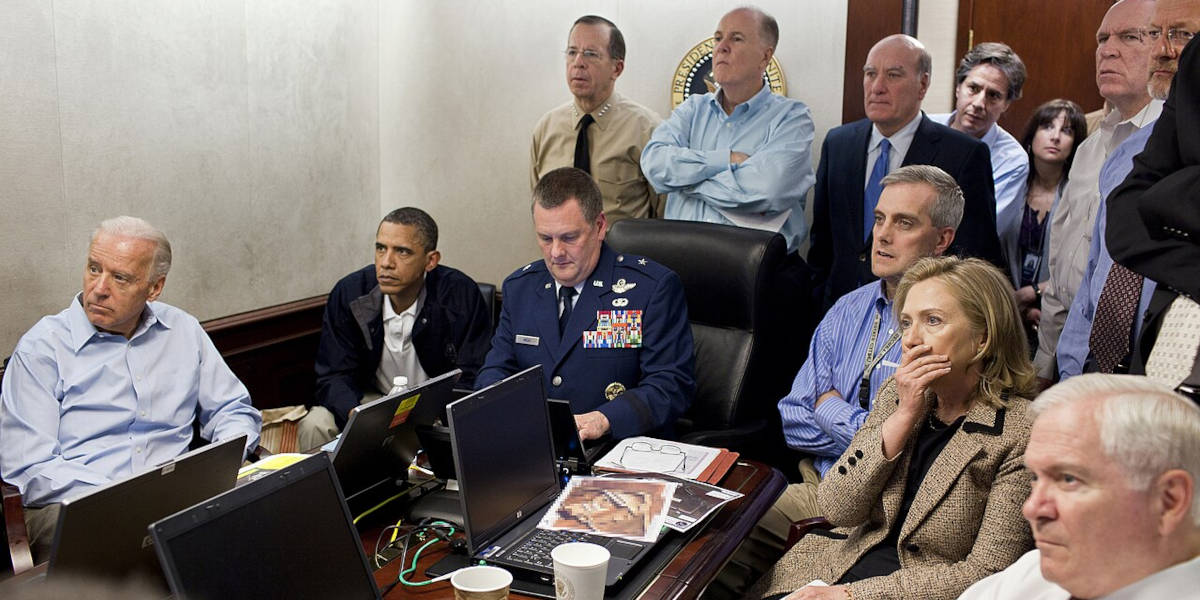
US agents killed bin Laden in Pakistan, apparently without cooperation from the government in Islamabad. The al Qaeda leader was responsible for great suffering, I do not mourn his death. But every action has causes and consequences, and in the current moment all are dangerous. It is unlikely that the killing of bin Laden will have much impact on the already weakened capacity of al Qaeda, widely believed to be made up of only a couple hundred fighters between Afghanistan and Pakistan, though its effect on other terrorist forces is uncertain – Pakistan itself may pay a particularly high price.

As President Obama described it, “After a firefight, they killed Osama bin Laden.” Assuming that was indeed the case, this raid reflects the brutal reality of the deadly wars in Afghanistan and Iraq that preceded it and that continue today, ten years later – it was not about bringing anyone to justice, it was about vengeance.

And given the enormous human costs still being paid by Afghans, Iraqis, Pakistanis and others in the US wars waged in the name of capturing bin Laden, it is particularly ironic that in the end it wasn’t the shock-and-awe airstrikes or invasions of ground troops, but rather painstaking police work – careful investigation, cultivating intelligence sources – that made possible the realisation of that goal.

President Obama acknowledged that the post-9/11 unity of the people of the United States “has at time frayed.” But he didn’t mention that that unity had actually collapsed completely within 24 hours of the horrifying attacks on the twin towers. September 11 didn’t 'change the world'; the world was changed on September 12, when George W. Bush announced his intention to take the world to war in response. That was the moment that the actual events of 9/11, a crime against humanity that killed nearly 3,000 people, were left behind and the 'global war on terror' began. That GWOT has brought years of war, devastation and destruction to hundreds of thousands around the world, in Iraq, Afghanistan, Pakistan, and beyond.

There was an unprecedented surge of unity, of human solidarity, in response to the crime of 9/11. In the US much of that response immediately took on a jingoistic and xenophobic frame (some of which showed up again last night in the aggressive chants of 'USA, USA!!' from flag-waving, cheering crowds outside the White House following President Obama’s speech). Some of it was overtly militaristic, racist and Islamophobic. But some really did reflect a level of human unity unexpected and rare in US history. Even internationally, solidarity with the people of the US for a brief moment replaced the well-deserved global anger at US arrogance, wars, and drive towards empire. In France, headlines proclaimed “nous sommes tous Américaines maintenant.” We are all Americans now.

But that human solidarity was short-lived. It was destroyed by the illegal wars that shaped US response to the 9/11 crime. Those wars quickly created numbers of victims far surpassing the 3,000 killed on September 11. The lives of millions more around the world were transformed in the face of US aggression – in Pakistan alone, where a US military team assassinated bin Laden, thousands of people have been killed and maimed by US drone strikes and the suicide bombs that are part of the continuing legacy of the US war. These wars have brought too much death and destruction, too many people have died, too many children have been orphaned, for the US to claim, as President Obama’s triumphantly did, that 'justice has been done' because one man, however symbolically important, has been killed. However one calculates when and how 'this fight' actually began, the US government chose how to respond to 9/11. And that response, from the beginning, was one of war and vengeance – not of justice.

President Obama’s speech last night could have aimed to put an end to the triumphalism of the 'global war on terror' that George Bush began and Barack Obama claimed as his own. It could have announced a new US foreign policy based on justice, equality, and respect for other nations. But it did not. It declared instead that the US war in Afghanistan, Pakistan, Iraq and beyond will continue.

In that reaffirmation of war, President Obama reasserted the American exceptionalism that has been a hallmark of his recent speeches, claiming that 'America can do whatever we set our mind to.' He equated the US ability and willingness to continue waging ferocious wars, with earlier accomplishments of the US – including, without any trace of irony, the 'struggle for equality for all our citizens.' In President Obama’s iteration, the Global War on Terror apparently equals the anti-slavery and civil rights movements.

Today, across the region, the Arab Spring is on the rise. It is ineffably sad that President Obama, in his claim that bin Laden’s death means justice, did not use the opportunity to announce the end of the deadly US wars that answered the attacks of 9/11. This could have been a moment to replace vengeance with cooperation, replace war with justice.

But it was not. Regardless of bin Laden’s death, as long as those deadly US wars continue in Afghanistan, Pakistan, Iraq, and beyond, justice has not been done.


Phyllis Bennis is a fellow of the Institute for Policy Studies and of the Transnational Institute in Amsterdam. Her books include Before & After: US Foreign Policy and the War on Terrorism

share


5 comments

tina says:

I so totally and utterly agree. While not mourning the death of this man,the world just became more dangerous and certainly in no way did it become less dangerous with this public act of vengeance. So sad, so tragic a waste of an opportunity to end this unwinnable so-called GWOT.

sam jennings jr. says:

While Bin Lain deserved to hang from the highest limb,this is no celebration. Our media outlets will ultimately make ink a martyr without trying. Pray for our troops, pray for our country.

Robert says:

It’s like the bombing of a tyrant in Libya, we are told it’s legal to bomb and try to hit people who are evil, then we hear that three children are killed, that slips past and we are told the hit on Gaddaffi is OK, but what about the hit on the children.

Bombs dropped on Iraq hits a school children are killed we are told thats just casualties it happens.

Today Bin Laden is killed we are told a young women who was a hostage was killed thats OK because we killed Bin Laden.

Life it seems is cheap in the world of tit for tat politics, the only winner of course is that smiling little shit Blair who has made a fortune.

Kingharvest says:

The US basically has two distinct economies now, the bankrupt “free market” economy that supports the needs of big business, and the war economy, which supports the needs of big business, shareholders and anyone else with money.

Seriously, the US is spending TRILLIONS of dollars on war and armaments and anyone lucky to be a part of it is getting rich.

And this war economy is steadfast and will be for decades. No fear of inflation or unions or other pesky factors. Just plain profits.

The US action can be likened to a gangland murder. Police? You’re joking aren’t you? We’ll do it our way!

It’s worth studying a UN press release on 2nd May. The Security Council hailed the death of bin Laden, welcomed the news that he “will never again be able to perpetrate such acts of terrorism”, and called for increased co-operation among countries to urgently “bring to justice the perpetrators, organisers and sponsors of terrorist attacks.”

Full text in UN press release here: http://www.un.org/News/Press/docs/2011/sc10239.doc.htm

One can ask : what does the expression “bring to justice” mean in that sentence? Does it mean justice in the Texan sense? As when George W Bush vowed to bring the terrorists to justice or justice to the terrorists?


Fasting to support Guantanamo Bay hunger strikers We spoke to Maya Evans during her fast over the weekend in solidarity with Guantanamo Bay hunger-strikers

A new party of the left comes one step closer Salman Shaheen of Left Unity, the group supporting Ken Loach’s call for a new left party in Britain, reports from its first national meeting

Diary of a ‘wannabe MP’: local elections, UKIP and the left Davy Jones is Green Party parliamentary candidate for Brighton Kemptown at the next general election and a member of Red Pepper’s board. This is the second of a series of regular blogs on his campaign

South Africa’s poor resist home attacks Amid Britain's decision to cut aid for South Africa by 2015, Caroline Elliot hears from poor shack dwellers who vow to resist the destruction of their homes.

Open House begins this weekend in London A nine-day event bringing together people facing the housing crisis across London to organise and take action around our collective housing needs

Call to protect Colombian human rights defender On 10 October 2012, a man pushed a gun into the chest of Alfamir Castillo and told her that both she and her lawyer were going to die.

Beyond the Fragments is more than history The book was part of challenging the left's methods of organisation, writes Alice Robson - and that struggle continues today as it is republished

Meet Red Pepper’s new co-editor, Michelle Zellers Michelle Zellers introduces herself, her reasons for wanting to be part of Red Pepper and her hopes for its future

Bedroom tax: Lessons in morality from Iain Duncan Smith Kara Moses reflects on the experience of protesting at the Tory minister’s mansion – and offers a glimpse of the luxury he enjoys while lecturing us about ‘fairness’

Reviewing the NHS – speaking ill of the dead Junior doctor Paul Teed says patient satisfaction surveys give an illusion of ‘choice’ in the NHS – but bad reviews don’t create more capacity or employ more staff

latest from red pepper


Tapping the resistance in Greece A combination of opposing privatisation and putting forward practical alternatives is helping water campaigners mount an effective challenge to austerity in Greece. Hilary Wainwright reports

The seven faces of Michael Gove Mike Peters looks at how the Tory education secretary uses the words and ideas of the left to win support for his policies

The Brighton pay dispute: the union view GMB union organiser Rob Macey puts the workers' side of the argument

The pay dispute at Brighton council: a Green view Davy Jones, Green Party parliamentary candidate for Brighton Kemptown, gives his view of a dispute that has caused huge debate among Green Party members in the city and across the country

Jeremy Hardy thinks… about the right to exist 'We’d all say a person has a right to a home, but we wouldn’t say their home has rights.'


Red Pepper is a magazine of political rebellion and dissent, influenced by socialism, feminism and green politics. more »

Get a free sample copy of Red Pepper

ads


The UK's leading supplier of Fair Trade products

get updates


Get our email newsletter, with news, offers, updates and competitions.
help red pepper

Become a Friend of Red Pepper
Help keep Red Pepper afloat with a regular donation

Watch films online
See free trailers and support Red Pepper by streaming the full films:
Cocaine Unwrapped
The War You Don't See