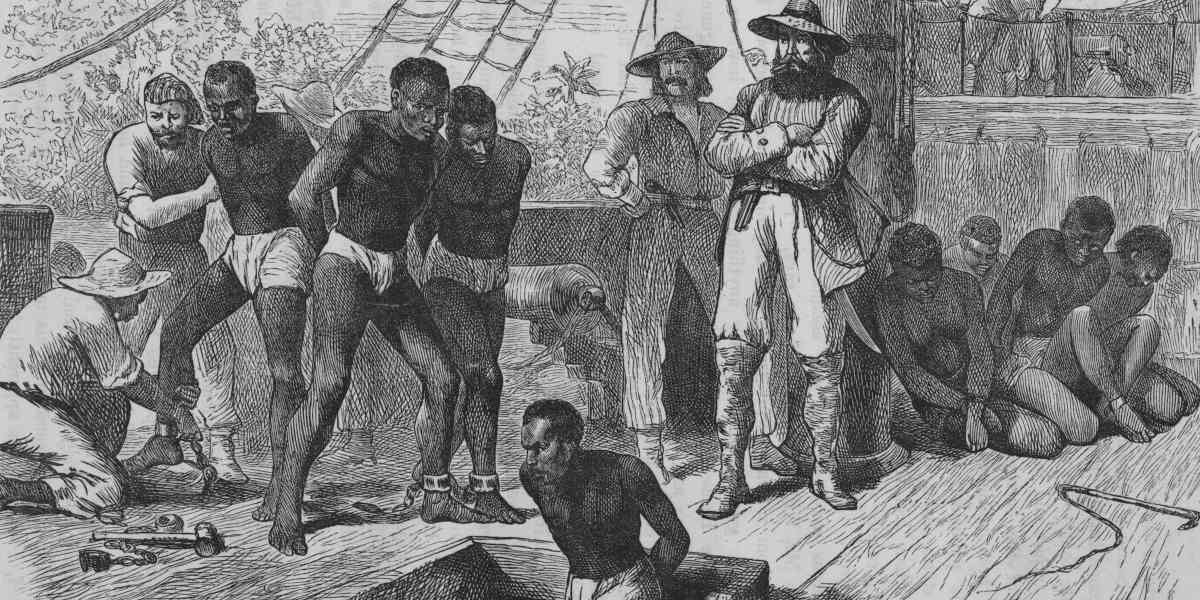
On 27 March a national commemoration service will be held at Westminster Abbey to mark the bicentenary of the parliamentary abolition of the transatlantic slave trade in the former British empire. It is part of a series of events throughout 2007, representing a monumental public relations exercise by the British establishment to hoodwink people into believing that Britain led the world in abolishing slavery through the moral compassion of an abolition movement led by white middle class parliamentarians.
In fact, Britain was not the first country to outlaw slavery. The French convention to abolish slavery was passed in 1794. Several US states, including New Jersey and Delaware, abolished it in the 1780s and Denmark abolished it in 1792. Britain passed the Abolition Act in 1807 because slavery was no longer profitable, due in large part to the heroic efforts of Afrikan freedom fighters in Haiti, Jamaica and elsewhere in the Caribbean.

A monthly dose of our best articles direct to your inbox
But these facts pale in comparison to the lasting legacies of the Afrikan Holocaust (or Maangamizi, which in Swahili means literally ‘mass destruction’) that continue to impact on the lives of the black majority world. As the late Eric Williams, a former prime minister of Trinidad and Tobago pointed out in his book Capitalism and Slavery, the Afrikan Holocaust helped to finance the industrial revolution and enriched Europe through the sugar and tobacco industries.
Plunder and trauma
The crude division of the Afrikan continent at the 1884-85 Berlin conference imposed the domains of the colonial powers, resulting in the social, cultural and political fragmentation of the indigenous Afrikan peoples. The legacy of the colonial scramble for Afrika is embodied in its present political geography, which facilitates the continued colonial exploitation and economic domination of the continent. After enjoying hundreds of years of the free labour of enslaved Afrikans, rather than making reparations to Afrikan countries for their stolen wealth and lost lives, the colonisers instead loaned money at extortionate rates. It is now common knowledge that the original loans have already been repaid several times over and are unjust debts, often taken out by corrupt leaders. Yet as Oxfam reported in 2004, developing countries pay out $100 million a day to service debts from rich nations.
Global institutions such as the IMF and World Bank also serve as structures and agents of neocolonialism by imposing conditions on these loans. In April 2006, Africa Action, a US-based campaign organisation, condemned IMF and World Bank policies as a ‘public health hazard’, forcing massive cuts to public spending in return for debt relief, loans and aid. As a result, millions now go without basic services and Afrikan countries are restricted in their ability to fight HIV and AIDS. This is reinforced by rich countries through their control of the World Trade Organisation. Trade restrictions and higher tariffs imposed on processed goods from Afrika in the US (such as coca, make it impossible for it to develop a coca processing industry), confine the continent to producing raw materials and prevent the creation of jobs in the industrial sector.
These economic disparities are matched by the social, psychological and cultural legacies of enslavement. David Gillborn, professor of education at the Institute of Education, recently explained: ‘The most dangerous form of white supremacy is … the taken-for-granted routine privileging of white interests that goes unremarked in the political mainstream.’ This white supremacy originated in the racist theories that abounded during the Enlightenment era, when they were used to justify slavery and colonisation, reducing Afrikans to the status of chattel, with slaves accounted the status of three fifths human in the US at the time.
The Afrikan Holocaust stripped Afrikans of their cultural identity resulting in a damaged psyche that to a large degree internalises this racism. Joy de Gruy Leary, Afrikan-American author of Post Traumatic Slave Syndrome, argues that it is impossible ‘for a person to live their entire life as a slave and not be traumatised’. She claims that many of the social and psychological problems experienced by Afrikans on the continent and in the diaspora are the result of multigenerational trauma. Clinton Hutton, a political science lecturer at the University of the West Indies, takes this further in his theory of ‘anti own race syndrome’, which he describes as ‘the philosophy and psychology of assumed European world cultural superiority expressed by African people in their relations with each other and perceiving and operating in the world’.
The impact of shadism
These theories go some way to explaining why ‘shadism’ is such a prominent feature among non-white peoples. Dr De Gruy-Leary defines shadism as ‘a system of skin shade hierarchy which puts lighter skinned people at the top’. Why else would 160 million dark skinned people, who are in fact Afrikan descendants living in India, be condemned as ‘untouchables’, forbidden to worship in the same temples as other castes, from using the same wells, from drinking from the same cups, forced to sit at the back of classrooms, denied land that is legally theirs and subjected to rape, violence and torture?
Post-slavery in the Caribbean colonies, lighter skinned people were rewarded for being closer in coloration to whites with better jobs and treated socially with more respect, on the assumption that they had the positive attributes associated with whiteness. Consultant psychiatrist Dr Dele Olajide explains: ‘When you look at how we, as black people have been colonised and enslaved over the years, the value of the subjugated is to aspire towards the master group.’ As a result of these stereotypes and the absence of dark skinned persons held up as personifications of beauty, many dark skinned people resort to skin bleaching in desperation, due to feelings of self loathing. One only has to examine the plethora of research in the UK to see how people of Afrikan descent fare in British society. For example, only 58.4 per cent of ethnic minorities are in employment, compared with 74.6 per cent of the population as a whole, according to statistics from the 2005 Labour Force Survey. If the trend continues it will take 100 years to close this 16 per cent gap.
In September 2005, black men and women made up almost 15 per cent of the UK prison population. Black people are five and a half times more likely to be homicide victims and six times more likely to be stopped and searched compared to white people, according to the 2005 Home Office report on Race and the Criminal Justice System. The government’s own 2005 survey revealed that Afrikan-Caribbean men are 46 times more likely to be detained in a mental health hospital, while their children are outperformed in school by white, Chinese and Indian pupils, with just 41.7 per cent gaining five good GCSEs. Little wonder since school exclusion rates for black pupils are twice that of white pupils (25 per 10,000), whilst pupils of mixed ethnic origin have a similarly high rate (22 per 10,000).
The case for reparations
Far from engaging in a year of commemoration over an act passed 200 years ago, when Britain still went on to engage in colonial conquests long afterwards, the global black majority is still battling against the legacies of enslavement. The step that needs to be taken to right these wrongs is reparations. Both the Church of England and the Prime Minister have made varying levels of apologies for slavery, but have stopped short of discussing reparations. But these carefully worded statements cannot address past wrongs.
Esther Stanford, chair of the Pan Afrikan Reparations Coalition in Europe, states that reparations is not merely a financial issue, but is about repairing the damage caused by the Afrikan Holocaust:‘ The broader element of reparations is about making self-made repairs, organisational repairs, educational repairs, psychological repairs, repairs in our families and spiritual repairs… Admittedly, compensation is an aspect of reparations, but it also includes things like apologies, memorials, rehabilitation and so forth. However, compensation must be a means to an end and not an end in itself.’
So while the government seems intent on wallowing in self-glorification during 2007, after which it will close the chapter on slavery, for the global black majority it remains unfinished business. As Richard Reddie, project director of Set All Free said recently: ‘Things that happened in the past continue to shape the present. We need to be aware of the racism that came out of that particular era that still blights our society, issues of underdevelopment and issues of trade.’
Sociologist and cultural historian Dr Lez Henry stresses the significance of the spelling of Afrika as opposed to Africa, as a form of resistance against the notion that Africa was a western construct brought into existence by the colonial powers. Afrika asserts a self-determined cultural identity.
