
In 2024, more than 10,000 people died as they migrated towards Europe, while the English Channel saw its deadliest year on record. Such staggering figures rarely make it into political debates or social analyses, but their magnitude – an estimated death toll of at least 50,000 deaths since 2014 – demand a political and analytical reckoning. Beyond the noise of party politics, waves and dunes have become executioners for Europe.
While often courageously confronting this reality, organised action against mass migrant death offers little explanation for it. Some groups decry massacres as moral crises of ‘European values’ and ‘human rights’, while others explain them through a vaguely defined ‘necropolitics’. To understand this phenomenon, however, we must examine structurally why so many migrants are being killed. Migrant deaths are a prime example of what Engels called social murder: ‘one more of omission than of commission’, but ‘quite as much a death by violence as that by the sword or bullet’.
At a mass and uninterrupted scale, social murder amounts to genocide. Intent matters little when the deaths don’t abate. Enter the tacit premise of all European politics: the migrant genocide.
Capital’s dead end
Transition to capitalist relations in Europe transformed overwhelmingly rural societies. The mass expulsion of peasants from their lands separated them from their means of subsistence and compelled them into wage labour. They filled the ranks of emerging industrial production, initiating the urbanisation of European societies.
Many people, however, were made redundant. Capitalist production could not reabsorb into employment all the people it had dispossessed, creating ‘dangerous classes’ that threatened social peace. But Europe’s ruling classes found a solution: making room for their surplus populations in their colonial outposts, where sustained genocidal violence could free up new means of subsistence for the excluded white classes. Settler colonisation was the fix to capital’s inability to provide for the survival of (even) its metropolitan subjects.
Social contradictions were effectively exported; domestic order was restored. This made it seem as though Europe’s ‘agrarian question’ had been resolved. The transition to urbanised waged formations appeared successful. Unemployment could be kept at bay and surplus populations in the past, all while production and prosperity multiplied. This narrative became the core of capital’s success story: its model of development, commentators boasted, could replace peasant based societies with an arrangement that would improve life for the majority.

A monthly dose of our best articles direct to your inbox
The model became gospel, even across political divides. Societies worldwide could use it to ‘develop’. Colonialists deployed the narrative to justify their plunder. Even some Marxists, such as Karl Kautsky, prophesied that the world’s peasantry would eventually disappear with capitalist expansion, as it had in Europe. This development narrative justified social democracy’s colonial complicity.
The envisioned ‘progress’, however, did not materialise. In today’s global south, capitalist penetration has proceeded unrelented. Swathes of people can no longer subsist off their land. Urban and industrial production has been largely unable to absorb them back into employment. This has led to the exponential growth of people ‘outside the workforce’, slums and informal labour.
The much-touted development model is failing. The south’s agrarian question appears to have no solution. The conditions that held for Europe don’t hold today. Industrial production – where it is not targeted by imperial assault, war or sanctions across the south – is much less labour intensive, creating significantly less employment than before. Not even miraculous rates of growth could absorb these surplus populations.
More importantly, the south does not have ‘five or six Americas’ to ‘solve’ its contradictions. This means that capitalism’s development model cannot be reproduced on a world-scale. As Samir Amin puts it, the ‘resolution’ of the north’s agrarian question generated ‘a gigantic agrarian question in the peripheries, which it can only solve through the genocide of half of humankind’. The model is a dead end for the world’s majority.
The sea is the symptom
Capitalism is a failed historical attempt at replacing the mode of social reproduction – the way we collectively organise our survival – on a world scale. Europe’s mass slaughter of migrants is an expression of this world historical failure. It is not a crisis of values, morality or policy. It will not be solved by appeals to human rights. It is the crisis of global capital, unable to solve its primary contradiction: its inability to provide for the survival of the world’s peoples, even before we consider ecology.
Political economists in the global south have long pointed to this contradiction. Sam Moyo, Paris Yeros and Praveen Jha took Amin’s insight a step further, arguing that the solution to the south’s agrarian question was not some genocide to come, but one already being carried out structurally, through lives cut short en masse. Ali Kadri further elaborated on this insight, situating wasted lives and nature at the root of capital accumulation.
While social democracy equivocates, fascism provides a clear path
Systematically lower life expectancies across the south are forms of generalised premature death that also amount to unrelenting genocidal pressure. Southern premature death and migrant slaughter at sea, then, are two sides of the same phenomenon. They are both expressions of capital’s de facto solution to the agrarian question in the south.
In this sense, Europe’s response at sea and beyond – letting people die en route, ‘pushbacks’ to near-certain death, sanctioned paramilitary violence and more – is not uniquely brutal. It aligns with the global norm. Just as it lets entire populations, directly or indirectly, die premature deaths in the south, so it does on its borders. The only difference is that the latter is more visible to European publics, which risks mass radicalisation by laying bare the material base of Europe’s ‘way of life’.
Given capital’s bleak ecological horizon, the migrant genocide is a rehearsal of the future. Capital is rehearsing the solution to its protracted crisis of global social reproduction – its inability to keep the planet or its beings alive – in Europe’s southern seas. The Mediterranean is a window into the future.
The path to fascism
Often forgotten in Kwame Nkrumah’s definition of neocolonialism is that it includes indirect control of both the global south and northern welfare states, which ‘export’ social contradictions and transfer ‘the conflict between rich and poor from the national to the international stage’. Through racially selective welfare in the north, neocolonialism becomes a deliberate effort to divide our class, creating a guarded labour aristocracy separate from those super-exploited or wasted by imperialism.
Immigration to Europe throws this neocolonial arrangement into crisis. It not only ‘imports’ back the contradictions that capital had exported, but it also endangers this partition of the global working class. European fascism returns from these deeper social currents, this time emerging as an attempt to ‘solve’ the contradictions of imperialism as they come home to roost.
European borders here fulfill an important function: they maintain the stratification of our class – ‘the secret,’ as Marx once called it, ‘by which the capitalist class maintains its power’. Fascism intensifies border enforcement and anti-immigrant discourse to reinforce this rift and reassert the neocolonial compact. This is the chief domestic function of fascism, and it is no coincidence that it wins primarily on the heels of ‘the migrant question’.
Given capital’s bleak ecological horizon, the migrant genocide is a rehearsal of the future
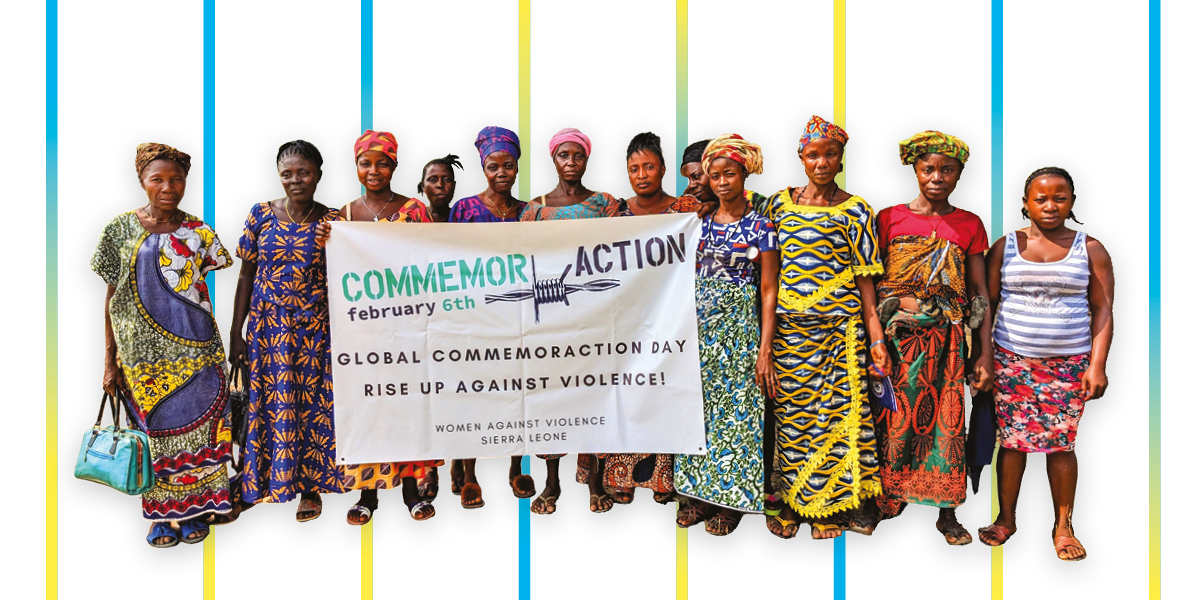
Meanwhile, grassroots action is beset with challenges: the threat and increasing reality of criminalisation; the difficulty of mobilising around a crisis displaced beyond Europe; media normalisation of migrant deaths; and the general silence of social movements. NGO rescue ships and hotlines bravely attempt to counter the migrant genocide. Anti-racist movements, migrant solidarity organisations and federations of families of disappeared migrants organise ‘CommemorActions’, from Germany to Niger, mourning those murdered by Europe’s borders and denouncing its fortress regime. Their ability to withstand the escalating state offensive against migrants, however, is limited.
Class organisations, in turn, consistently fail to prioritise organising around the migrant question. Often understood as humanitarian, the province of NGO work, or simply as immaterial to class politics, the displacement of the problem translates into political irrelevance. Absent or schematic notions of imperialism preclude awareness of the centrality of immigration to a serious politics of class confrontation, surrendering the will for building organisational capacity and mass power. A reckoning is needed. White class organisations must marshal their power against the state’s anti immigrant offensive as a conscious act of self defence: as conditions worsen, they will be next.
The secret to our win
The migrant genocide is the ghost that haunts European politics. It is the backdrop against which immigration, the defining cleavage of European societies, unfolds.
Europe’s electoral left has no answer for this. Social democracy systematically equivocates, alternately condemning racism and celebrating border violence. As in the Second International, social democrats sidestep the imperialist question, which is today most clearly expressed in immigration from the south. Indeed, a key lesson from organising in the Spanish anti-racist movement under the country’s self-proclaimed ‘most progressive government in history’ has been reckoning with the indisputable fact that social democracy will continue to betray the global south.
While social democracy equivocates, fascism provides a clear path. It will do everything possible to shore up the declining neocolonial arrangement – to save the racially guarded labour aristocracy. The left’s equivocation on the migrant question, its refusal to make anti-racism and anti imperialism a priority, to assert in word and deed the unity of our class, is once again ‘the secret’ to its defeat.
Equivocation is powerless to combat fascism. It is pivotal that we understand mass migrant slaughter as a chief moment of the class struggle, not simply in humanitarian terms. European class struggle starts at the bottom of the sea. Only a principled anti imperialist position can address this. To invert Marx’s formulation, this might be the secret to our win.

