



It was the most remarkable criminal trial in modern British history. In 1991, an Old Bailey jury unanimously acquitted two men of helping a notorious British spy escape from jail on 22 October 1966, even though they readily, even proudly, admitted it.
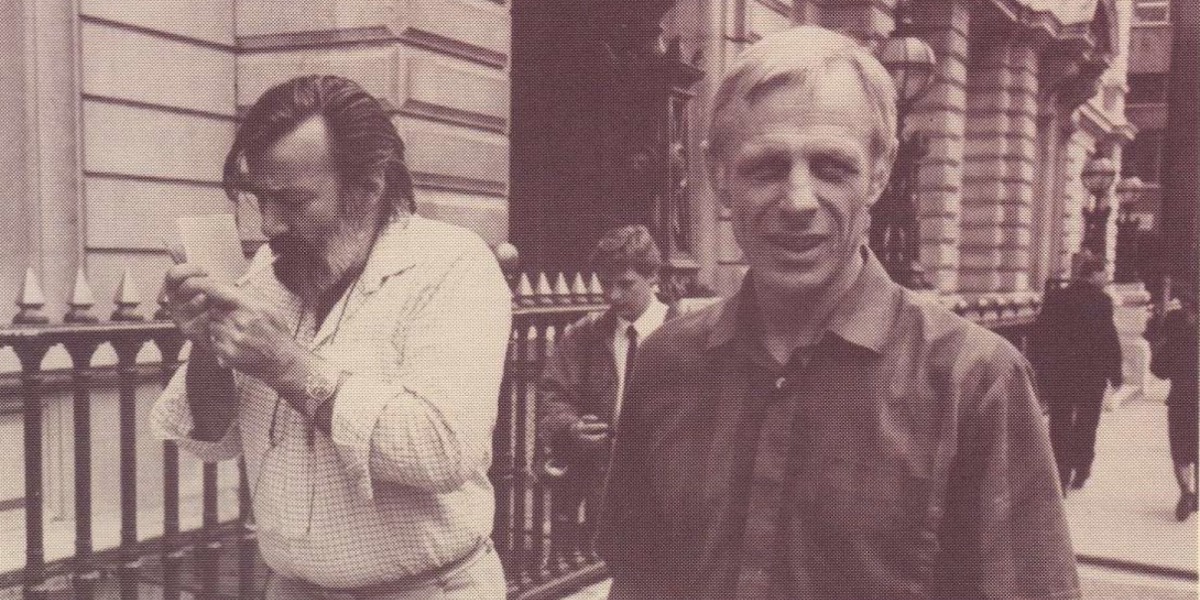
The spy was George Blake. Those who helped him were Michael Randle and Pat Pottle, leading advocates and practitioners of nonviolent direct action and opponents of nuclear weapons. A far cry from the hardened KGB plotters whom Britain’s security establishment assumed were behind the operation.
Randle, here writing his own story, explains how he and Pottle were incarcerated in Wormwood Scrubs prison in London, convicted of breaching the Official Secrets Act after protesting in the US nuclear bomber base at Wethersfield, Essex. Blake was a fellow prisoner, jailed for an unprecedented 42 years after confessing to spying for the Russians. He had been exposed by a Polish intelligence officer who defected to Britain.
Randle and Pottle insisted they did not approve of Blake’s spying for Russia. But they pointed out that most countries recruited spies, including Britain, where members of the Cambridge spy ring, which famously spied for the Soviet Union from the 1930s into the 1950s, were offered immunity from prosecution in return for confessing. Randle and Pottle helped Blake escape, on humanitarian grounds, after it was first suggested by Irish prison mate Sean Bourke.
On trial
The book gives both a most serious and a highly entertaining account of an astonishing Old Bailey trial. Randle and Pottle defended themselves. It was difficult, even self-defeating, for lawyers to disregard their professional oaths by arguing in court that people who admitted breaking the law were innocent. Sympathetic lawyers were however instrumental in pretrial arguments over the disclosure of official documents relevant to the case. The documents showed that MI5 and the police Special Branch suspected that Randle and Pottle were responsible for helping Blake to escape only weeks after the event.
Their names were later thinly disguised in books such as The Springing of George Blake, written by Sean Bourke, and later in George Blake Superspy, by Montgomery Hyde. Among those who harboured Blake was a priest, John Papworth. Documents disclosed to the defence before the trial revealed how one day Papworth’s wife, on one of her regular visits to her psychiatrist, said the spy was in her house. The psychiatrist replied that she was delusional and had seen too much of Blake on television. She was told to take more pills.
Even after the two men acknowledged their role in a book in 1989, the authorities were reluctant to pursue them. However, political pressure finally led to them being charged with aiding the escape. One hundred and ten Conservative MPs signed a motion demanding their trial after the inaptly named Freedom Association threatened a private prosecution.
It was held in 1991, in Court 1 of the Old Bailey, where, 30 years earlier, Blake had been sent to prison. Blake himself, now safely in Moscow, returned to that courtroom by video link to praise his liberators for their humanitarianism, adding that never during his own trial was he accused of sending British agents to their deaths.
Over several days, Randle and Pottle cross-examined each other. Pottle, who had been secretary to Bertrand Russell, quoted the renowned philosopher: ‘Remember your humanity and forget the rest.’ Randle referred to a case in 1670, when the judge directed the jury to find two Quakers, William Penn, and William Mead, guilty of causing an unlawful assembly after preaching on a Sunday afternoon in the City of London. When they refused to do so, the judge locked up the jury overnight. They were released after they successfully obtained a writ of habeas corpus.
Court verdict
Randle and Pottle ignored their increasingly frustrated judge, Justice Alliott, who was worried that if he appeared to be bullying the two defendants in the dock, he might encourage the jury to sympathise with them. He told the jury that they had to honour his ruling in law – namely that the two defendants were guilty. It was late in the morning. Randle and Pottle were not hopeful. After their free lunch, which the jury clearly did not want to miss, the judge returned and asked the foreman if they had reached a verdict. They unanimously found Randle and Pottle not guilty on all counts.
Lawyers described it as a ‘perverse verdict’, one that happened from time to time. A more sympathetic one told me that ‘some juries smell oppression’. Randle has been jailed three times for taking part in nonviolent direct action, a cause and principle to which he is almost suicidally committed. Rebel Verdict, a riveting read throughout its 500 pages, is a testament to him and Pottle, his equally committed friend and colleague. Pottle died in 2000 and Blake in 2020, aged 98. Randle has just turned 90. Their story would make a brilliant television drama, or even a feature film.