
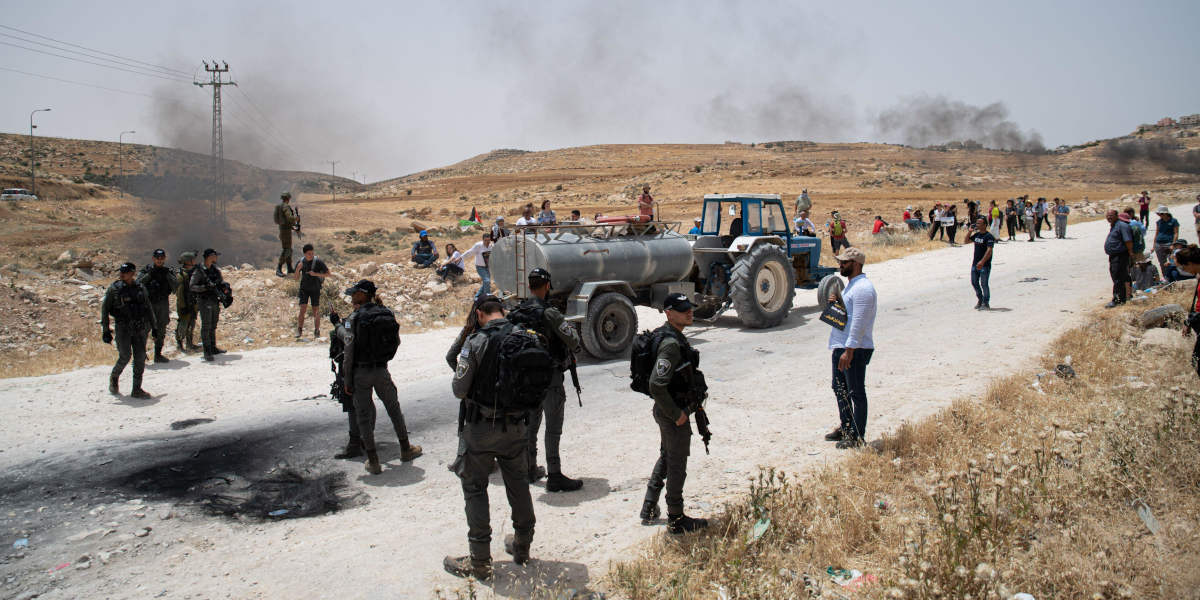
This article is part of our exclusive series: Breaking the Sword in Occupied Palestine, focusing on occupation and resistance in the West Bank. Published in partnership with The International Solidarity Movement (ISM)
For decades, Israel’s settler colonial and apartheid state has denied Palestinians the basic right to water. Water apartheid is a deliberate system of state-led policies that restrict a racialised population’s access to water while privileging another group’s claims to it.
Mekorot is Israel’s national water company. In an era of dangerous climate change, the state-owned corporate enterprise markets itself as a pioneer in innovation and sustainability. In reality, Mekorot is an engine of water apartheid.
Mekorot was set up in 1937 and chartered with the purpose of serving those of ‘Jewish race and descent’ before the formal establishment of the Zionist settler colonial state. Today, it diverts water from Palestinian villages and cities to illegal Israeli settlements while simultaneously barring Palestinians from their own aquifers and natural springs.
We spoke to farmers in the Jordan Valley as we harvested fields together. Ibrahim, provided an example: ‘A few years ago, Israeli forces carried out a severe operation here. They entered the town with over thirty bulldozers and dozens of soldiers to destroy and confiscate the city’s waterlines’.
In Palestinian communities that are not connected to the water grid, average daily water consumption is a mere 26 litres per person, similar to disaster zones. In nearby Jewish-only settlements, Israelis consume ten times as much per person. Mekorot ensures the illegal Zionist enclaves are adorned with swimming pools, watered lawns, and lush gardens.
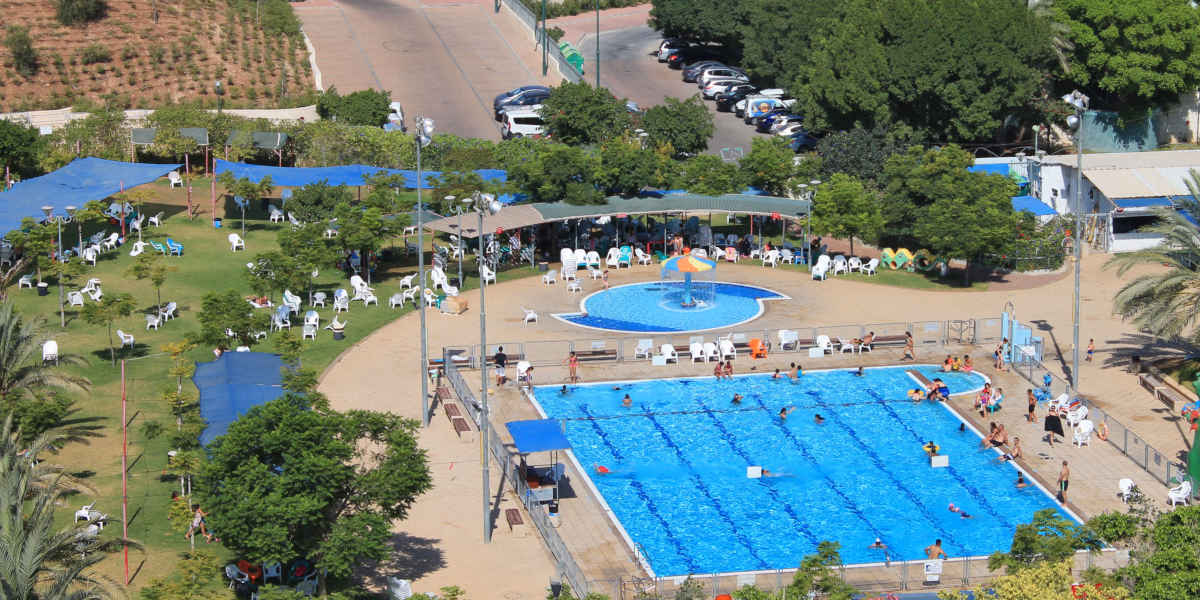
CREDIT: DAVID MOSBERG
The infrastructure to divert water away from Palestinian villages was consolidated following the 1967 Naksa (‘Setback’) when the Israeli military issued orders asserting total authority over all water resources. Since then, Palestinians have been required to obtain military permits for even the simplest form of water system. They are near universally denied.
In the West Bank, Israel’s permit regime ensures attempts by Palestinians to reclaim sovereignty over water is met with state repression. Mekorot then collects money by selling water back to Palestinians. In Gaza, even before the genocide, 97 percent of water was undrinkable, a result of Israel’s blockade and destruction of sewage treatment plants.

A monthly dose of our best articles direct to your inbox
The Israeli army besieges Palestinian water systems by cutting pipes, demolishing cisterns, confiscating tanks, blocking community connections, preventing repairs, and filling wells with concrete. Zionist settlers also poison water sources, dump sewage onto Palestinian fields, kill animals, and throw carcasses into wells to make water bacteria-laden and hazardous.
Attacking water has always been a key page in Israel’s colonial playbook. From Operation ‘Cast Thy Bread,’ the 1948 microbiological poisoning of Palestinian water sources, to the bombing, theft, and commodification of water sources today, Zionism has waged environmental warfare against Palestinians from the outset.
Green colonialism and Indigenous erasure
To launder its international reputation, Israel greenwashes the damage it does to Palestinian land, life, and water. It brands itself as an environmental steward by boasting of technological innovation, ecotourism, and climate smart agriculture. The reality is much darker.
Hamid, a Palestinian researcher we interviewed, described the situation: ‘Israel calls itself “green” while it steals our water, uproots our trees, and turns our land into unmanageable parks and settlements. They are selling the world ‘sustainability”, but here we live with broken water pipes, poisoned fields, and wells that are stolen from shepherds and farmers at gunpoint… …if you want a glimpse of “green colonialism”, come to Palestine’.
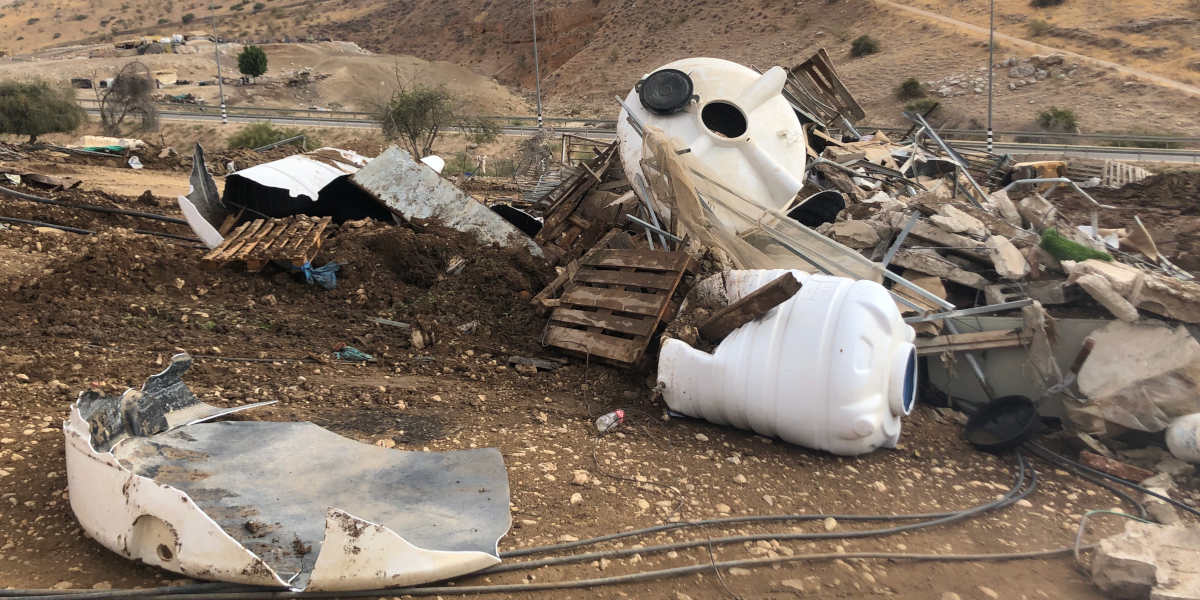
CREDIT: ISM MEDIA
Green colonialism is the extension of the colonial relations of plunder, dispossession, and dehumanisation in the era of the so-called green transition. In simple terms, the costs of ‘going green’ are absorbed by peripheral countries, communities, and populations. Today, Israel rationalises water theft, land grabs, and resource extraction through discourses of ‘green’ development, sustainability, and conservation.
Zionism has long deployed environmentalist narratives and racist tropes to mask and justify colonial violence. The myth of ‘making the desert bloom‘ is a foundational piece of propaganda that disavows Palestinian presence. By denigrating the indigenous Palestinian population as primitive, savage, and stolid, the Zionist movement sold itself as a civilizing force that could tame the wild frontier and exercise mastery over nature.
The only way we will survive is not only to protect the water we have, but start taking it back
After 1948, the Jewish National Fund (JNF) spent decades planting millions of non-native European pines over the ruins of razed Palestinian villages. In the short term, the Zionist state was covering up mass graves and ethnic cleansing. In the long term, it was attempting to erase ancestral memories and prevent the return of Palestinian refugees.
The JNF’s imported pine trees were also a crass attempt to ‘Europeanize’ the landscape. Only 10 percent of the trees planted by the JNF are native to Palestine, and these non-indigenous species reduce biodiversity, are highly flammable, acidify soils, and consume significantly more water than Palestine’s natural semi-arid flora.
Israel’s ‘green’ agenda is thereby attacking the conditions that sustain Palestinian life; extinguishing Palestinian place names and manufacturing scarcity and material deprivation more broadly. As Salwa, a Palestinian university student told us, ‘The occupation is using nature reserves and archaeological sites to steal water, cover up crimes, and wipe Palestine off the map’.
Fighting back ‘from below’
Across Palestine, resistance to water apartheid grows from a colonial reality that the Israeli occupation tries to disguise through corporatised claims to security and sustainability. Palestinian communities live near springs, aquifers, wells, and pipelines, yet the Zionist occupation controls the infrastructure and decides who can drink, irrigate crops, and ultimately remain – and at what cost.
Israeli military rule, settlement expansion, and Mekorot’s tight grip over water turn a resource managed sustainably for centuries by Palestinians into a weapon. Palestinians, however, refuse to view water theft as ‘business as usual’. As Nadim, a long-time union organiser, explained to us: ‘The only way we will survive is not only to protect the water we have, but start taking it back’.
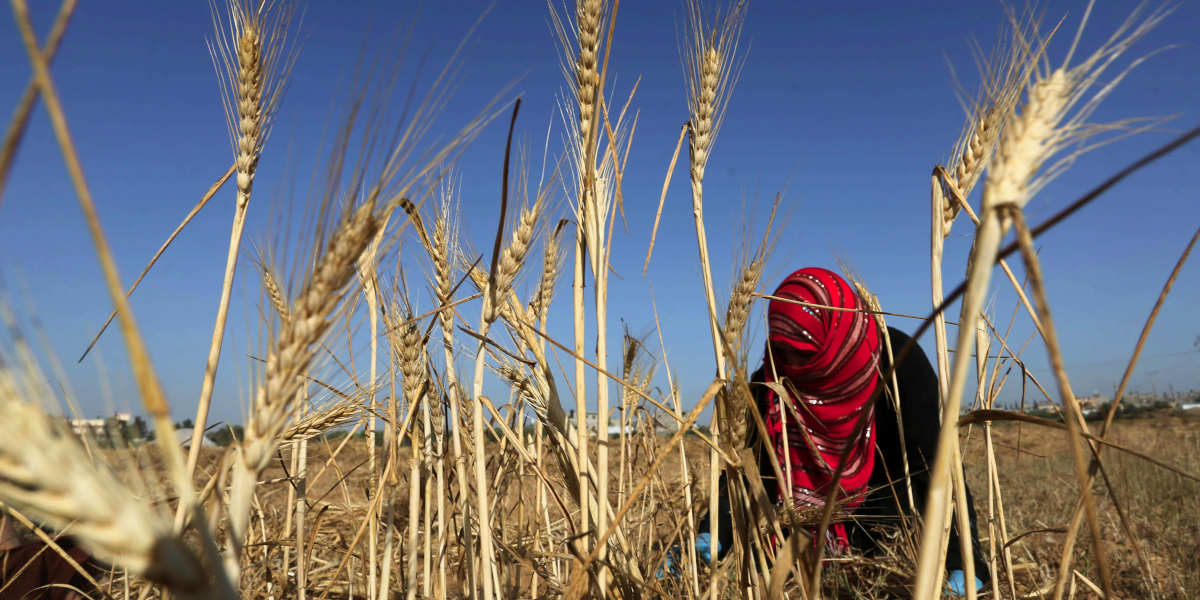
CREDIT: ZUMA PRESS
This resistance is often practical because water is practical. A repaired pipe can keep remote families in their homes. A restored spring can keep rural farmers and shepherds on threatened land. A cultivated field can block Israeli legal justifications for confiscation. Such acts may seem small, but they are defending the material basis of Palestinian life.
In the Jordan Valley, communities have organised water marches after attacks on infrastructure and started campaigns around the right to water. These mobilisations expose the central lie of water apartheid. Palestinians do not suffer because the land, water, and local ecosystems cannot sustain their ways of life. They suffer because the Israeli occupation is stealing territory and resources, then killing Palestinians who resist.
‘The occupation is using nature reserves and archaeological sites to steal water, cover up crimes, and wipe Palestine off the map’
Resistance also works through mobilising and building institutions ‘from below’. Palestinian farmers’ unions support agricultural workers, defend wages, move produce to market, secure health insurance, and pursue legal claims. Local community committees offer mutual aid when families lose access to water and face pressure to leave.
Grassroots resistance and solidarity networks make a major difference because the Zionist movement has historically attempted to sever Palestinian life and land relations. Collective organising rebuilds social power across communities where the Israeli apartheid regime is attempting to create isolation.
The defence of natural springs, cisterns, and wells carry specific force. In villages where Zionist settlers target natural springs and cisterns, Palestinians protect them through regular use, repair, and collective presence. A water well used by a community is much harder to seize, rename, or fold into a settler landscape.
In addition to survival, water has become a key source of political struggle and inherited memory. It binds Palestinians to their intergenerational biocultural heritage, strengthens their ancestral relationships with the land, and will forever remain a cornerstone of Palestinian sovereignty, self-determination, and struggle.

