
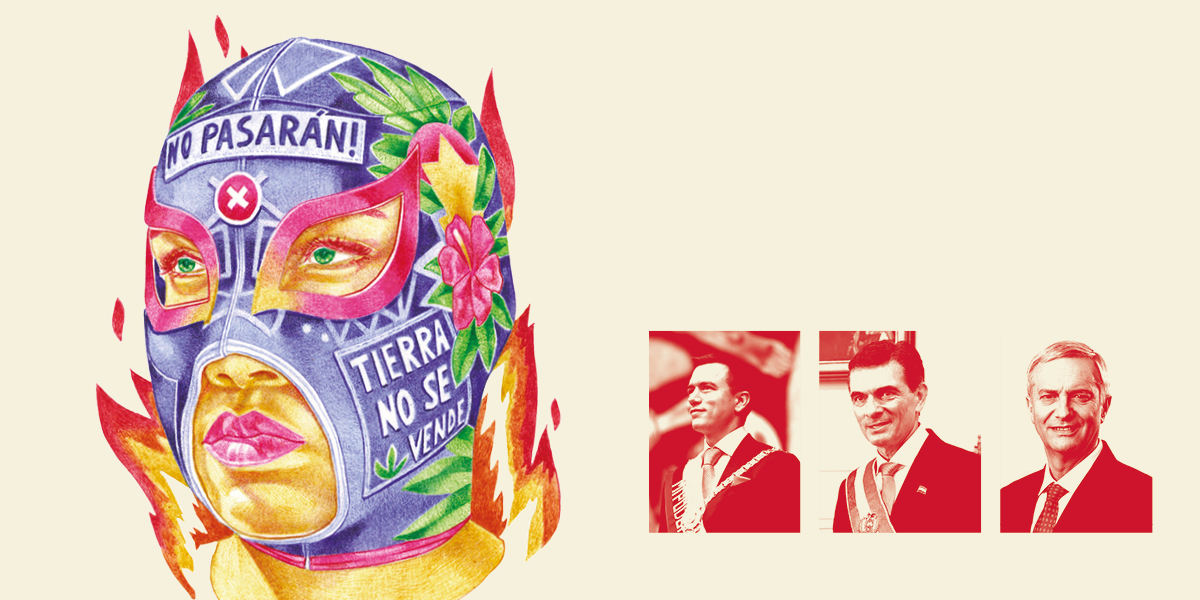
The 2026 US national security strategy promises pan-hemispheric domination, displacing decades of global meddling with a refocused, Monroe Doctrine style ‘Trump corollary’: the ‘Donroe Doctrine’. In essence, US imperialist interests are turned squarely on the Americas – though it’s doubtful they’ll give up elsewhere. Illegal abductions in long-sanctioned Venezuela signal a revival of old style US intervention.
But the continent’s nominally democratic rightward-shift indicates that juntas won’t always be needed – or obvious. Despite two left-wing women candidates coming close to election wins last year, US-aligned men ultimately shot into power, following in the footsteps of Argentina’s anarcho-capitalist leader, Javier Milei. Communities are responding: Ni un paso atrás!
Daniel Noboa, Ecuador (2023-)
Nepo president Daniel Noboa is heir to Ecuador’s wealthiest oligarch, Álvaro Noboa, the billionaire owner of a fruit and logistics empire powering agricultural export-led growth. Noboa was re-elected in April 2025 after a narrow 2023 snap-election win. The result was contested, with electoral fraud allegations made even by his own running mate.
In power, he has passed sweeping anti-democratic executive powers and austerity measures, dismissed 5,000 public employees and cracked down on opponents. His platform promotes corporatist, militaristic mano dura (‘iron fist’) approaches to drug trafficking, albeit unresponsive to allegations against his own family. Ecuadorians suffer repeated military violence, often targeting minorities, including four African Ecuadorian boys executed by soldiers in late 2024.
Noboa announcing the construction of new high security prisons
CREDIT: ISAAC CASTILLO
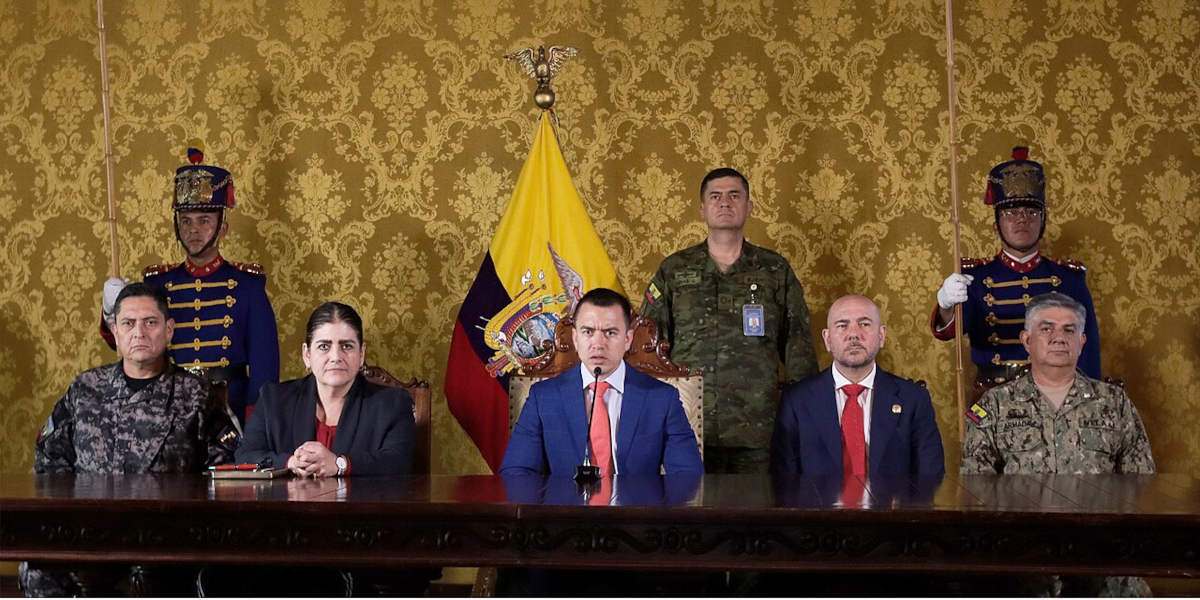
Noboa outsources military duties to Trump ally Erik Prince’s private corps Blackwater – whose mercenaries were imprisoned for committing massacres in Iraq – and praises El Salvador president Nayib Bukele’s terrorism confinement centre (CECOT) gulag. He has suggested foreign armies form part of his dubitable war on drugs, pledged to cooperate more actively with Israeli armed forces and industry, and welcomed US military personnel to Ecuador shortly before its illegal operation in Venezuela.

A monthly dose of our best articles direct to your inbox
Not all hope is lost. In September 2025, Ecuador’s indigenous unions led a month-long general strike, The government was forced to revoke Canadian-owned DPM Metals’ neocolonial goldmining project – which endangered the Quimsacocha water reserve – after 100,000 locals resisted the project in near-unanimous opposition.
Then, in November, Noboa backed a rare referendum aiming to overturn progressive constitutional rights won by socialist ex-president Correa and to reinstall US military outposts, among other drastic reforms. Voters overwhelmingly rejected the proposals, despite – or perhaps because of – US Department of Homeland Security secretary Kristi Noem’s pre-referenda propaganda trip to Ecuador.
Rodrigo Paz, Bolivia (2025-)
Evo Morales’ popular Movimiento al Socialismo (MAS) dominated Bolivian politics for two decades. MAS oversaw sweeping recognitions of indigenous rights, sidelined by the prior constitution; advancements in public healthcare, education, and infrastructure; and became a powerful symbol for the global left. Eventually, however, MAS became mired in political infighting and corruption, finding socialism difficult to administer in the world’s largest informal economy, and abandoned many populist promises.
Enter Rodrigo Paz, a ‘capitalism for all’ president elected on a neoliberal policy platform and Spanish-born relative of two ex-presidents. As mayor of Tarija, Paz built commercial malls and plazas that offered little to the city’s predominantly working-class residents. As president, he swiftly legalised Elon Musk’s Starlink satellite internet – overruling considerable privacy and data security concerns – and reestablished ties with Israel, which MAS had severed in 2023.
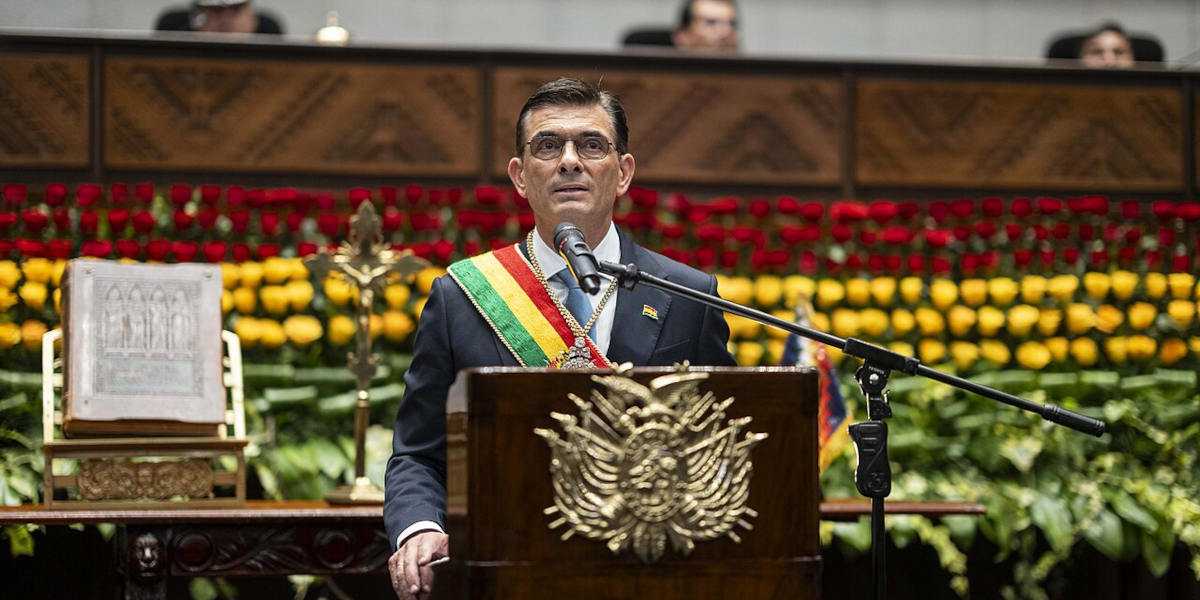
Rodrigo Paz during his inauguration
CREDIT: DIRECCIÓN DE PRENSA, PRESIDENCIA DE CHILE
Paz has also arrested ex-president Luis Arce over corruption allegations and promised to ‘reopen’ Bolivia’s critical mineral resources to international markets, a position warmly welcomed by US secretary of state Marco Rubio. Paz has eviscerated universal fuel subsidies, sending fuel, bus and food prices soaring by up to 160 per cent and crippling many households across the low-income plurinational state.
Although Bolivians grew wary of MAS, many still demand economic dignity. In response to Paz’s neoliberal reforms the largest trade union congress, Bolivian Workers’ Central (COB), initiated a general strike. COB-affiliated workers have led demonstrations and roadblocks and its leaders have refused to negotiate with a president intent on dividing social movements and reversing progress. Following a ‘national revolution’, strikers eventually won demands from Paz’s government, including raising minimum wages and security guarantees for future disputes. Unionised indigenous food-seller Vilma Paredes told Red Pepper: ‘Who knows, maybe we’ll discover we don’t need political leaders, we just need to organise ourselves for the common good.’
José Antonio Kast, Chile (2026-)
Parental sins aren’t hereditary, but when a German Nazi officer’s reactionary son wins Chile’s presidential election it’s hard to ignore red flags. Kast ran on a platform hailing the brutal neoliberal dictator Augusto Pinochet. His brother Miguel was president of the central bank under the Pinochet regime.
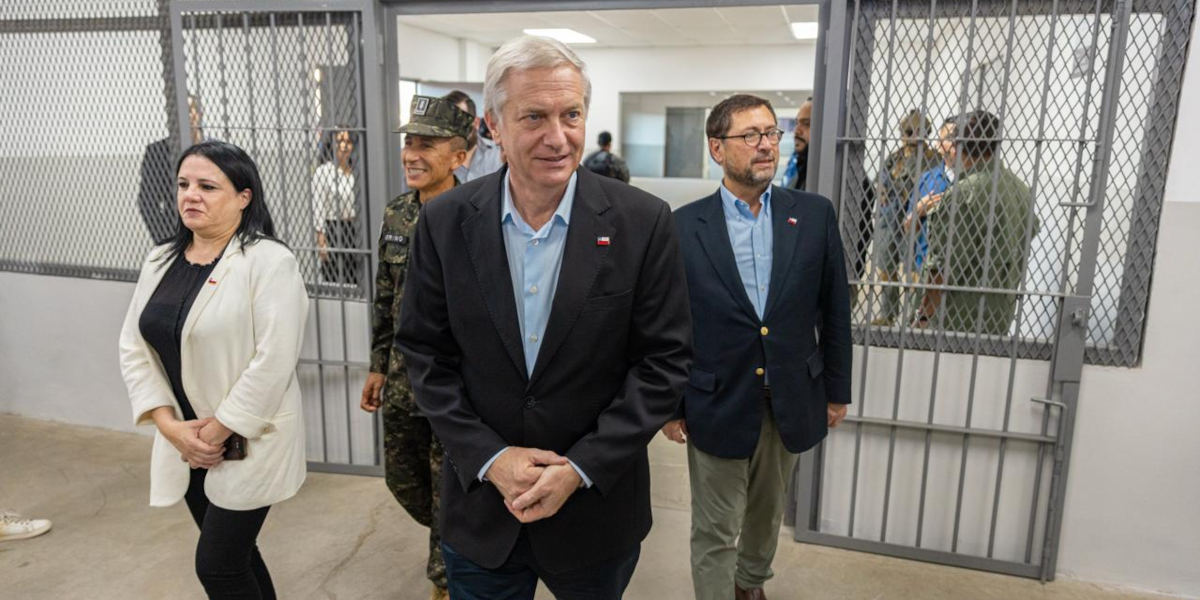
Fearmongering on immigration and crime, Kast also cites inspiration from Trump, Nayib Bukele and the border fence policies of Hungary and Israel. Though deeply Catholic, Kast ran on evangelical platforms – courting a voter bloc influential in Brazil, Kenya, Indonesia and beyond – and formed Chile’s very own Republican Party. Kast was immediately congratulated on his victory by US Republican leaders and will enthusiastically enlist in US regional policy. He plans to ramp up copper and rare-earth mining production, a boon for foreign extractivists that threatens local indigenous communities.
Chilean President José Antonio Kast touring the Terrorism Confinement Center (CECOT) in El Salvador
CREDIT: CASA PRESIDENCIAL El SALVADOR
Kast’s win will embolden ‘culture warriors’ globally. He derides homosexuality, abortion and contraception, immigration and indigenous rights. He opposes compensating the 40,000 recognised survivors of Pinochet-era state violence. Despite Chile’s regionally low crime rates, his victory speech declared: ‘Chile needs order!’
Thousands of immigrants now fear for their safety and LGBTQI+ rights group Movilh has declared a nationwide ‘state of alert’. Mapuche spokespeople warn that ‘a repressive and genocidal policy against indigenous peoples will be deepened’, as in neighbouring Javier Milei’s Argentina. They have declared that the Mapuche will defend themselves where national laws fail.
The feminist coalition Coordinadora Feminista 8M has declared that the ‘most urgent task of the social and popular movement is to activate our collective strength and build broad, autonomous social bases of opposition, capable of mobilising to stop the attacks that are coming’. The group organised to lead a nationwide general strike for bodily autonomy and against fascist creep on International Women’s Day, three days before Kast’s inauguration.

