
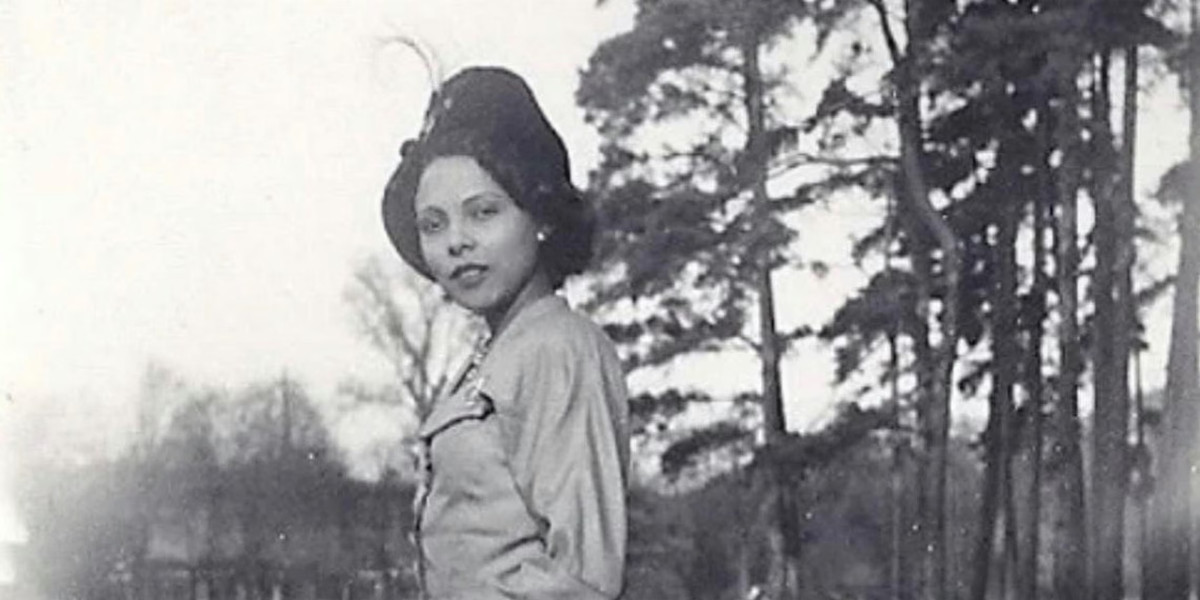
Title: My Country, Africa: Autobiography of the Black Pasionaria
Author: add author, pluralise / change to editor(s) if needed
Publisher: Verso
Year: 2025
My Country, Africa: Autobiography of the Black Pasionaria tells the little known life story of Andrée Blouin (1921-1986). Appearing in history books as the chief of protocol under Patrice Lumumba, the first prime minister of Congo, she was also his organising sister-in-arms in the lead-up to the country’s 1960 independence from Belgium.
But this book, written in a crisp, accessible narrative style, is not a book about Lumumba. Barely 50 of its 283 pages, which span Blouin’s life story and anti-colonial organising and diplomacy in what is today the Central African Republic, Guinea, Congo-Brazzaville and the Democratic Republic of Congo, cover her time spent with Lumumba and his comrades. The book pays more attention to the (inter)personal and psychological rather than to political ideology and strategy but nevertheless tells a powerful and still urgent story of what the anti-colonial struggle must contend with.
Despite its title, the extent to which the book is a genuine autobiography is unclear. Originally published in 1983 by Praeger and re issued in 2025 by Verso, My Country, Africa is believed to be based on translated and edited interviews in collaboration with Blouin’s friend and editor Jean MacKellar. In the epilogue to this new edition, Blouin’s youngest daughter, Eve, speaks of her legal struggles to recover the rights to the text and her mother’s attempts to prevent its original publication before her death, finding it to be too psycho-social and lacking a clear political statement. The label ‘Black Pasionaria’, the book’s subtitle, was bestowed upon Blouin by a journalist at the time, one of many labels that that seeps into some sections, reading Blouin’s story against a larger structural background of colonialism can be viewed as an exercise in colonial literacy.
Colonial violence
Born of a 40-year-old French coloniser and a 14-year-old central African mother, at the age of three Blouin was placed in an abusive orphanage for ‘mixed’ children run by the Catholic church. Her subsequent adult life was marred by various forms of racist and sexist violence. Despite the centrality of colonial violence and cruelty throughout, Andrée is hardly ever portrayed as solely a victim. My Country, Africa offers the children of colonisers and colonised alike a palpable story of bearing witness and remembering the violence, all the while containing lessons on the shared project of refusing and resisting colonialism.
As a second-generation Rwandan, born in Belgium in 1979 and raised in a white Flemish foster family, I read the book as a child of Belgian colonisation. My parents were born in Rwanda when it was still a Belgian ‘protectorate’. By the time independence came, in their early teens, my father was in exile in eastern Congo following the 1959 massacres, one of the many preludes to the 1994 genocide.
Reading Blouin’s story against a larger structural background of colonialism can be viewed as an exercise in colonial literacy
By the 1970s, colonialism and its aftermath had turned them into exiles and migrants, as they settled and met in Brussels, where my sister and I came into being. As children of the colonies in the metropole, our lives were shaped by the goal of becoming as white (civilised) as possible. It was not until adulthood that I discovered my close aunts and uncle, also now living in Belgium, had spent parts of their childhood in Rwanda at an orphanage for ‘métisse’ children of the Belgian colony not unlike Blouin’s.
Despite my being a few generations away and on the other side of the world, Andrée’s life story resonates: racist (corporal) abuse, the humiliating violence of self alienation, being treated as second class citizens or beings, or read as sexually available before anything else. The recounting of sustained, everyday projects of reprogramming and civilisation tells an enduring truth about colonial violence and how it moves and reproduces itself. In a western context, this political truth-telling has the power to dispel imperial nostalgia, or any pretence that colonial systems of governance were anything but cruel, violent, racist, humiliating and murderous, if not genocidal.
A messy account
What we have in My Country, Africa is a mediated self-account of a woman who lived to see the last decades of French and Belgian formal colonial rule in central and west Africa. It is a messy account, a lesson in complexity: despite Blouin’s life being so shaped by anti colonial and pro-women politics, the account is not consistently so. The book sometimes slips into infantilising, patronising and reductive narratives still prevalent in the west today. There is, for instance, the way she speaks of her child-like ‘little mother’ Josephine; how she bemoans, with pity, the deplorable situation of ‘African women’; and the recurrent sweeping generalisations she makes about ‘we in Africa’ or ‘Africans’.
At the same time, the titular phrase ‘my country, Africa’ is, for Blouin, both a clear-eyed political statement and choice of African unity and pan-Africanism. Rare designations of anything African as universal in the book seem to stem from her deep and intimate appreciation for the ‘traditional’ practices inherited from her mother. Blouin ends the book with these words: ‘I want Africa to be loved. I speak of my country, Africa because I want her to be known. We cannot love what we do not know… Where there is knowledge, surely there will be love.’
The text’s messiness is also linguistic. A battle is waged between the English translated interviews and the French expressions used throughout, and no non-colonial language is available to express the profound and life-giving way that Africans organise their sacred and everyday, outside of the cliché and exoticising language of ‘tradition’. This maybe speaks to limits of the book’s desire to make Africa and Africans understood and loved by the white world in the language of the coloniser. Yet the attempt is still there.
Political moral clarity
As a historical document that lays bare the structure and logics of colonialism, the book’s strength is in its political moral clarity, delivered through the messy lives of those who reject the dehumanisation of their home, Africa, while carrying the weight of the cruel colonial system they are forced to navigate. In this sense, My Country Africa allows us an intimate understanding of the profound havoc that colonial violence wreaks upon a people, their lives, society and environments.
The book closes with the assassination of Patrice Lumumba, but as we know the story does not end there – in the DRC the genocidal destructive force of colonialism continues unabated. Meanwhile, Palestine is coming out of more than a year of genocidal warfare by the state of Israel and its allies, while decades of settler colonialism continue unabated. While the book might not offer a toolkit to turn these tides, it offers an urgent and much-needed call to remember and understand the devastating violence that is colonialism, in order to build a politics of ‘never again’.
The life of Andrée Blouin
- 1921: Born on 16 December in the French colony of Ubangi-Shari (today’s Central African Republic) to Josephine Wouassimba, a 14-year-old Banziri girl and Pierre Gerbillat, a 40-year-old French colonial businessman.
- 1924: At age three, Andrée was taken away from her mother and placed into a Roman Catholic orphanage for ‘mixed race’ girls in the then-French Congo. In 1936, 15-year-old Andrée fled the orphanage in defiance of an arranged marriage after years of neglect and abuse.
- 1942: On her 21st birthday, Andrée gave birth to her second child, René, with her husband, the Frenchman Charles Greutz. Just two years later, René died after being denied malaria medication by the French colonial administration due to his mixed heritage. After the breakdown of her marriage to Greutz, she remarried the French engineer André Blouin.
- 1957: After escalations in independence campaigns across the continent, Blouin threw herself into the agitation for the end of colonial rule in then French New Guinea, becoming a noted organiser among the entourage of Guinea’s first president-to-be Sékou Touré. Guineans won independence in 1958.
- 1960: Blouin headed the women’s wing of the Congolese independence drive. Once the Democratic Republic of Congo gained independence from Belgium in June 1960, she became the chief of protocol for newly-elected president Patrice Lumumba, writing speeches and serving as diplomatic liaison.
- 1961: In the midst of the Congo crisis, Blouin was sentenced to death shortly after Lumumba’s assassination. Denigrated by foreign press as an extremist and a courtesan, she fled the country and settled in Algeria.
- 1970: After divorcing her husband, Andrée relocated to Paris, where she lived for the rest of her life before she died, aged 64, on 9 April 1986.

