
Following the second world war, the European colonial empires, most notably Great Britain and France, were in an unprecedented paradox. The Allies had mobilized their colonial subjects to fight, supposedly for freedom and democracy against fascism. But they maintained that they were incapable of self-governance. And after fighting Nazi white supremacy, African-American soldiers returned home to segregated American cities.
Particularly after Indian independence in 1947, self determination and equality became the centrepiece of emancipatory movements from the Caribbean to east Asia. Faced with this, colonial powers sought control over natural resources to safeguard the prewar order. So, when Iranian prime minister Mohammad Mosaddegh championed the movement to nationalise Iran’s oil industry, that threatened not only oil company profits but also the British empire’s regional influence.
Iran was never formally colonised but had long been the scene of competing imperial influences, particularly between the British and Russian empires. For the British, Iran held crucial geopolitical significance as a buffer zone for its prized south Asian colonies, as well as containing Russian access to the Persian Gulf maritime trade routes. The discovery of Iranian oil only intensified that competition.
Oil concession
In 1901, William Knox D’Arcy, a British entrepreneur, signed an oil concession with the Iranian Qajar king Mozaffar al-Din Shah. D’Arcy and the future Anglo-Persian Oil Company (APOC) agreed to pay the shah an annual cash payment of £20,000 (£2 million today), plus 16 per cent of future profits. In the city of Abadan, the APOC built the largest oil refinery in the world. This helped the British navy to modernise from coal-fired steamships to oil-fuelled ships. As the first world war loomed, the Iranian oil fields became a matter of national security for Great Britain. Later, Nazi Germany tried unsuccessfully to grab them.
The Allied victory changed little about Britain’s colonial-style control of Iranian oil. Despite a cosmetic name change – from the Anglo-Persian to Anglo-Iranian Oil Company (AIOC) – the company still took 85 per cent of the profit and maintained a tight grip on the industry. In 1947, AIOC net profit was £40 million (£450 million today) while Iran’s share was a meagre £7 million.
At Abadan, the huge refinery workforce was kept in desperate conditions. Workers earned around 50 cents a day, with no paid leave or compensation for injury. They lived in a company shanty town called Kaghazabad (Paper City), its makeshift dwellings built from cardboard boxes, scraps and flattened oil drums, with little sanitation In winter, the town drowned in knee-deep mud. In summer, the heat was brutal.

A monthly dose of our best articles direct to your inbox
Mosaddegh was a seasoned politician, who by the mid-1940s was increasingly vocal about transferring political power from the royal court to the Majlis, the Iranian parliament, to realise the basic principle of the 1907 constitutional revolution that the Shah must rule and not govern. Mosaddegh led a broad liberal time, the British government owned 50 per cent of AIOC shares. The bill was effectively a declaration of Iranian independence. Under pressure from the Majlis and the people, the shah reluctantly appointed Mosaddegh as prime minister. For the British, that was a declaration of war against their interests.
Simultaneously, the Tudeh Party (party of the masses), a Soviet satellite communist party, became a major force. They organised labour, teachers’ and student unions and demanded an end to British influence in Iran. The British, and later the Americans, feared this could grow into a full-fledged liberation movement, with Iran becoming a Soviet proxy.
The British first tried to refer the case to the International Court of Justice. They thought that proposing a 50-50 profit-sharing arrangement would neutralise Mosaddegh’s nationalist fervour. When negotiations fell through, Britain imposed sanctions against Iranian oil exports. The Royal Navy blockaded ports and organised military exercises in the region to intimidate the prime minister. Britain even contemplated an invasion of Abadan. With no signs of capitulation, it expanded sanctions and embargoed British exports to Iran. When that didn’t break Mosaddegh and his supporters, it turned to destabilisation.
The British campaigned to discredit Mosaddegh. They paid journalists and religious figures to write and preach against him, portraying him variously as a feeble character, a communist sympathiser and a corrupt politician. When the embargo and economic sanctions began to take a toll, the British MI6 warned US intelligence that Iran was headed toward anarchy and an inevitable Soviet takeover.
Operation Ajax
Britain found a receptive ear in the White House. Under President Eisenhower, the Dulles brothers – John Foster at the state department and Allen at the CIA – treated Mosaddegh as a cold war risk to be neutralised. The CIA and MI6 backed the covert ‘Operation Ajax’. Kermit Roosevelt was sent to Iran with a suitcase of American dollars to steer newspaper coverage, buy off military chiefs, politicians, and clergymen, and stage demonstrations to make a coup look like a spontaneous public uprising.
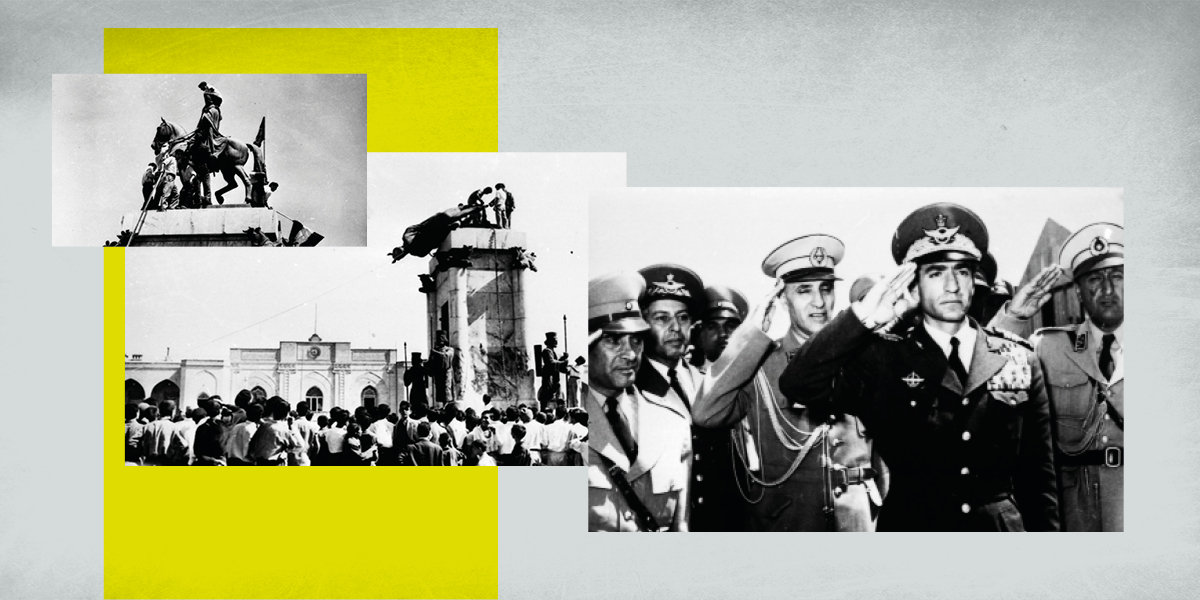
They wanted the shah to sack Mosaddegh and, if necessary, remove him by force. In August 1953, he did so, signing decrees removing Mosaddegh and appointing General Zahedi to replace him as prime minister. Rising tensions forced the inexperienced Mohammad Reza Shah to leave for Italy. That created a perfect context for the plotters to demand the shah’s return. Eventually, General Zahedi pulled his forces together and, on 19 August 1953, arrested Mosaddegh and his allies.
The coup ended the oil nationalisation movement but also the British monopoly. A new consortium took over operations.
Operation Ajax was the first successful CIA covert operation to topple a legitimate government. It helped to shape post-second world war geopolitics, particularly in the Middle East. This set a template for brutal operations that expanded US influence around the globe – Guatemala (1954), Indonesia (1955), Congo and the murder of Patrice Lumumba (1961), Chile (1973) and more.
Ajax did not simply remove Mosaddegh. It helped normalise the idea that regime change could be engineered quietly, then presented as order restored. We are still living with its consequences.

