



Art Workers for Palestine Scotland started in 2021, during the Israeli incursions into Sheikh Jarrah in occupied East Jerusalem and the subsequent assault on Gaza. That moment felt like the rebirth of the Palestine solidarity movement in the West – there was a massive march in Glasgow, where a few of us met and began our organising.
There was a strongly felt solidarity with Palestine across the Scottish Arts sector, but a taboo around speaking out against Israel. The precedent had already been set by the 2022 Russian invasion of Ukraine, when many arts organisations expressed solidarity with Ukraine as well as during Black Lives Matter when commitments were made to countering racism and colonialism in the arts. But this was totally lacking when it came to Palestine. After the 2023 Al-Aqsa flood and the genocide that followed, the Scottish Arts sector remained stifled by silence, exposing the hollowness of ‘decolonial’ rhetoric.
A big part of our political praxis is to expose and reveal; as Rosa Luxembourg said, ‘the most revolutionary thing one can do is always to proclaim loudly what is happening’. In 2023, we compiled the ‘Index of Silence’ detailing which Scottish Arts organizations had spoken out about Black Lives Matter, but not Palestine. Then, we focused on getting organizations to commit to the cultural boycott of Israel, as well as trying to get the investment firm Baillie Gifford out of the arts.
We’ve made a real incursion into the sector – initially, only a handful of Scottish arts organizations immediately endorsed the cultural boycott of Israel , but that number now stands at 251 at the moment, including 34 that get multi-year funding from Creative Scotland. Five have ditched Baillie Gifford as a result of our campaigning, and in the coming year we’ll be focusing on the five or six that still take funding from them.
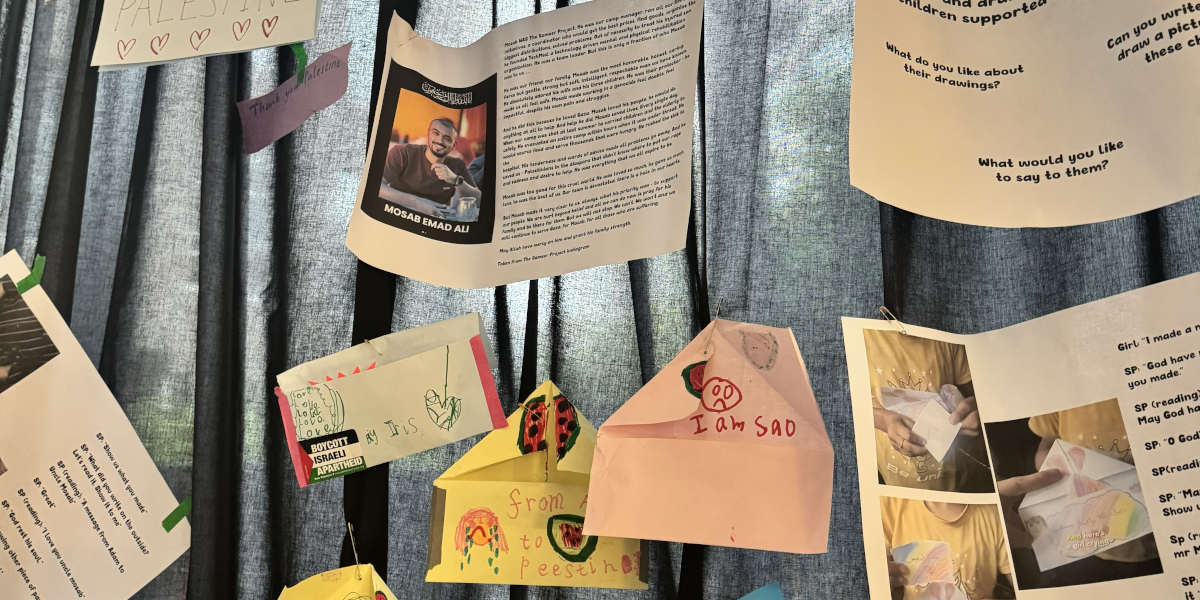
Another central part of our work is about political education and cultural production. We’ve run workshops, reading groups, political education sessions, and fundraisers. We recognized early on how important it was to have a vehicle for kids and parents and carers to be included in organizing, so we also have a very active kids group called PenPal Collective. Children often have a moral clarity around Palestine that adults lack, so we wanted that group to have autonomy in championing the voices of kids in Scotland in solidarity with kids in Gaza.
Growing the cultural boycott is not necessarily about material impact – it’s about manifesting a united cultural front against genocide and imperialism within the sector
‘Art Workers’ is a more class conscious term compared to ‘artist’ , that we want to use to push for more militancy and more collectivizing in the arts. When we started, we realized that people who work in the Arts often don’t see themselves as workers, that our sector is largely under-unionized, individualised and atomized. The term ‘Art Worker’ pays homage to a sociological concept from the 70s which questions what it is to work in the arts.
We knew that our greatest leverage was to use our collective labour to make demands of power, and that’s extended to working with a lot of front of house staff, like the Glasgow Film Theatre workers who staged a service boycott of Coca Cola through their union. Each commitment to the cultural boycott by institutions has been won through conversations between workers and boards or management, and the simple demand of joining the cultural boycott has provoked class struggle within these organizations.
We also wanted to acknowledge that challenging Zionism relates to class struggle, and that our sector is under the control of an authoritarian bourgeoisie in the form of unaccountable, unelected boards. This class dynamic isn’t always visible in the Arts, but these people rule with an iron fist, which we’ve seen in the way our members have been treated – with censorship, blacklisting, and even brutality from building security.
Growing the cultural boycott is not necessarily about material impact – of those 251, hardly any would have worked with Israeli cultural institutions in the first place – it’s about manifesting a united cultural front against genocide and imperialism within the sector to say to Creative Scotland that you cannot keep Palestine solidarity out of the arts, and that we will not allow Zionism to rehabilitate its image through art.
We want to provide a template for other organizers in the cultural sector, particularly in London where there actually is a lot of collaboration with Israel, to demonstrate that it is possible to reclaim the Arts by making concrete and achievable demands to those in power. Even though an open letter can seem tame, a community coming together and putting their names to a demand is the start of a long struggle which takes on a life of its own.
Art Workers for Palestine Scotland were talking to Paula Lacey