
Throughout its history, cinema has thrown up several types of politically engaged filmmaker. The most obvious are the ideologues, from Sergei Eisenstein to Jean-Luc Godard, who involve themselves with movements and propagandise for socialist ideas, sometimes doubling as critics or theorists who try to bring dialectics into film form as well as content. Others see it as their duty to document the present for future historians – an approach prevalent in the 1970s, when Patricio Guzmán made his Battle for Chile (1975) about the Pinochet coup and Chris Marker chronicled two decades of global uprisings in A Grin Without a Cat (1977).
Others do not align themselves to any party or movement, and maybe even ridicule the idea of organised politics, but nonetheless attack the world from a left perspective. Think of Rainer Werner Fassbinder’s brutal critiques of post-war West Germany and the Nazi attitudes that remained among not just political elites but the wider public and even within the radical left. Or Ousmane Sembène’s damnations of French colonialism and racism, and of the greed and corruption of the Senegalese governments that came after independence.

A monthly dose of our best articles direct to your inbox
Such distinctive directorial voices have been rare in the 21st century, with very few emerging who might claim to extend the tradition of the auteur. This is perhaps because the idea of the director as a primary ‘author’ has been deconstructed since its formulation in the 1940s. Film is an inherently collaborative medium, with cinematographers, actors and set and sound designers being fundamental to a director’s vision. It is also, however, due to the ongoing dominance of Hollywood blockbusters and especially the ‘intellectual property’ (IP) of film culture. This puts pressure on anyone working outside – or against – that culture to maximise their commercial potential in an age without much state subsidy for the arts, leading them to shave the weirder edges or regional specificities from their works.
Notable exception
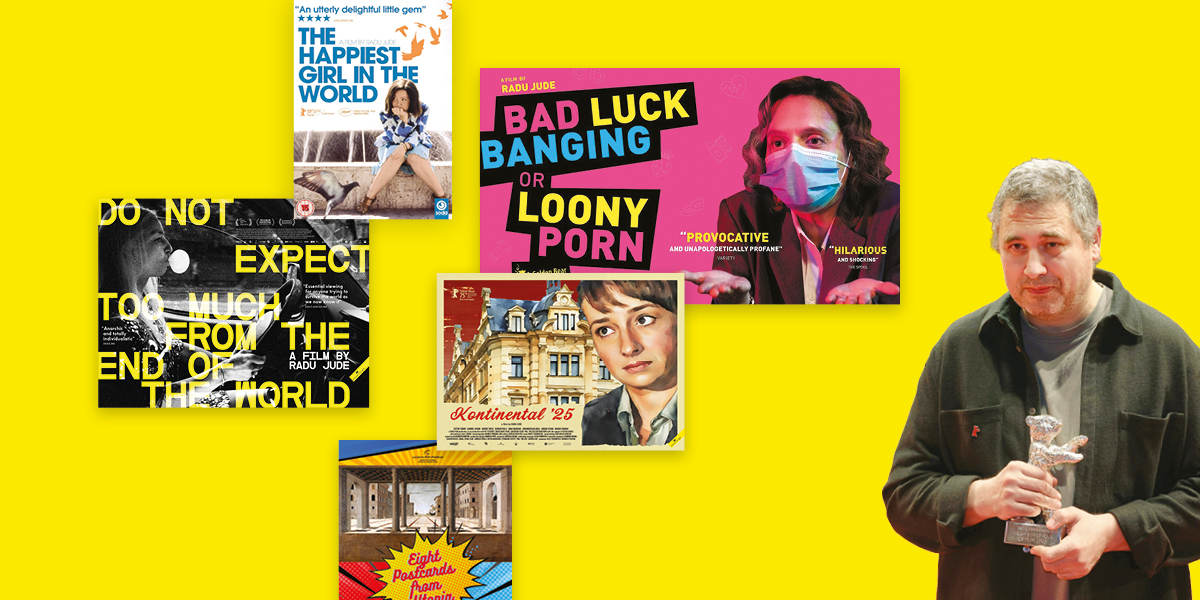
One notable exception is Radu Jude, whose films are formally inventive and deeply engaged with the contemporary politics, history and culture of his native Romania. Riotously funny, they have an astonishing range, from the 19th-century epic Aferim! (2015) to his take on Dracula (2025), in which a filmmaker experiments with AI to boost his career, and especially his cynical attempt to cash in on Romania’s most famous IP.
Several times, Jude has found intelligent ways to remind his audience, as Fassbinder so often reminded his, of his country’s fascist past. He did so in Scarred Hearts (2016), based on the writings of Max Blecher (1909-38), following the Jewish author’s dying days in a sanatorium as the Iron Guard strengthened their grip over Romania, and in the brilliant I Do Not Care If We Go Down in History as Barbarians (2018), about a filmmaker struggling to secure funding for a re-enactment of the 1941 Odessa massacre, when tens of thousands of Jews were murdered on the orders of Marshal Ion Antonescu. The film, whose title is taken from a speech that preceded the massacre, has a bitter ending that says much about historical memory and contemporary far right politics.
Bad Luck Banging or Loony Porn (2021) deftly considered the limitations of the Covid-19 pandemic as it still raged, with its story of a teacher who cannot get a sex tape taken off the internet as lockdown kicks in, before the local community sees it and judges her in a masked, socially distanced kangaroo court.
Confounding expectations
Jude’s best work so far – and, for me, the best film of the 2020s – is his freewheeling satire Do Not Expect Too Much from the End of the World (2023). Spinning off in several directions, it follows Angela (memorably played by Ilinca Manolache) around Bucharest, as she interviews injured workers for films commissioned by a multinational company to whitewash its fault for industrial accidents.
Underpaid, Angela moonlights as a gig economy taxi driver and builds up a following on TikTok by putting a filter of Andrew Tate – then being held in Romania – over her face and inhabiting the mindset of a misogynist influencer. Along the way, she quizzes the Austrian marketing director of the multinational about the EU extracting resources from Romania, meets the often-derided filmmaker Uwe Boll and talks to Dorina Lazăr, who played a taxi driver in a 1981 film called Angela Moves On, set in the Bucharest district that Nicolae Ceauşescu demolished to make way for his obnoxious Palace of the Parliament. The second section consists of one long take, in which Angela conducts an interview with a worker who causes a crisis by insisting that the injury that put him in a wheelchair was the company’s fault. She has to work out how to jettison him – a darkly funny and bleakly cynical conclusion that has become emblematic of Jude’s works.
Riotously funny, Jude’s films have an astonishing range
The distinctive title is lifted from a Polish poet, Stanisław Jerzy Lec, one of Jude’s many literary references, following the humour derived in Barbarians from the filmmaker sharing her name with Romanian poet Mariana Marin. It ties into the contemporary sense that the ‘end of history’ declared after the implosion of the Soviet bloc (accompanied, of course, by Ceauşescu’s sudden deposition and execution) is itself ending, with the future offering little but a grinding struggle to stay afloat while the rich guard their loot amidst slow societal collapse.
One of my favourite things about Do Not Expect Too Much from the End of the World is how fearlessly it captures an identifiable place and time: September 2022, with its characters considering the deaths of Elizabeth II and Jean Luc Godard as symbols of the end of 20th-century conservatism and radicalism. Its exploration of Bucharest suburbs, and even a notoriously unsafe stretch of road (in a sobering procession of graves) forms a welcome contrast to arthouse films that studiously avoid such specificity for fear of putting off viewers. Instead, Do Not Expect finds new avenues for Brechtian alienation, constantly reminding its audience of the politics of moving images, with Angela’s shift into the Tate character jolting us out of easy identification with her.
Satired and shoestrings
The protagonist of Jude’s next film, Kontinental ’25 (2025) is similarly complicated, with the audience having to consider whether she deserves the sympathy that she constantly demands. Jude deftly shifts his focus: the film opens with a destitute man stumbling around Cluj, a retired athlete down on his luck, terrorised by animatronic dinosaurs in a local park and a bailiff, who kicks him out and struggles to come to terms with his immediate suicide. Inspired by the great Italian neorealist directors, especially Roberto Rossellini, it’s a sublime meditation on the limits of liberal guilt. Bailiff Orsolya, expertly played by Eszter Tompa, repeatedly asks whether she is to blame for his death but never if the system of private property in which she participates should be abolished, or even reformed.
Filmed on an iPhone while Jude was making Dracula, using the same cast and locations, Kontinental ’25 is testament to his ability to write and film cheaply and fast without a loss in quality – another attribute he shares with Fassbinder, who made more than 40 feature films and several TV series in his 15-year career. Like Jude’s other works, it deals with inequality, nationalism and racism without ever losing his characteristic absurd humour, with Orsolya and her midlife crisis standing in for a Romania without direction and constantly being plundered by western European companies.
I had to wait months to see Kontinental ’25 after its festival appearances; Dracula was just as slow to reach the cinemas. My enthusiasm – and frustration – comes from Jude being the first director for years who makes me desperate to see what he does next, such is the originality and diversity of his output. His next film, Diary of a Chambermaid, will be about a Romanian woman working in France – his protagonists are usually, but not always, women – and may well confront the audience he won in Paris with his recent retrospective at the Centre Pompidou (Romania has long prided itself on its cultural interaction with France, to the point of building a replica Arc de Triomphe in Bucharest).
A putative follow-up to Dracula, entitled Frankenstein in Romania, is also scheduled. Jude will continue to look at how the EU enables the extraction of eastern Europe’s resources and exploitation of its citizens, along with the effects of AI on Romania’s already desecrated film industry, and will continue to make his audiences think and laugh along the way. As he approaches his 50th birthday, we can surely hope for another decade or two of his incisive social commentary and sharp images, which will hopefully inspire another generation to take similar risks to express themselves through film.

