
Of all the cultural artefacts of the COVID-19 pandemic, few struck a cord with quite so many people as Nintendo’s Animal Crossing: New Horizons. Well timed as it launched in March 2020, its low-stakes mechanics and cute characters satisfied basic psychological needs and provided comfort at a frightening and uncertain moment in history. But while most players have moved on to new games the genre of cosy games, popularised by New Horizons, have continued to rise in popularity, growing by 27% in Western markets since 2022 and accounting for 18% of mobile gaming revenues in Japan.
Though they span many different themes and different genres, cosy games are typically defined by low-risk play, soft music and aesthetics, generous customisation options and reassuring messages. To players, such gamespaces offer a near utopic reprieve from the constant precarity and alienation that typify life under capitalism. But such escape is illusory.
Cosy capitalism
To their publishers, video games exist to generate profits. Games produced by top studios cost around £70, and that is excluding the price of the console or online subscription service. The working conditions of the videogame industry are also far from cosy. Scholar Jamie Woodcock has documented widespread union-busting across the UK’s games development sector. The most famous cosy franchise – The Sims – is published by Electronic Arts (EA), a brand consistently accused of forcing its workers to crunch (the practice of overworking developers to finish a game). Last year, EA was purchased by Saudi Arabia’s Public Investment Fund for $55 billion, signifying the regime’s interest in applying its highly effective sportswashing model to the video game industry. The industry culture might seem at odds with one of the most popular game formats right now, but as a product cosy games sell escapism as a consumable experience whilst the exploitative working conditions that produced them are obscured from the player.
Perhaps a cosy game needs to be confrontational to begin to truly represent socialist politics
Such capitalist logics extend beyond the production and development of these games and seep into their very mechanics. Cosy games often require the completion of low-stakes tasks such as cleaning, cooking and selling goods to earn in-game currency which is then used to buy new upgrades and customisation options; a process referred to as ‘playbour’ by game studies scholars.
Another reason such games are attractive is, regardless of how soothing they are, they afford players power over the gamespace. Wealth is extracted through exploiting natural resources, as in Stardew Valley, whilst in other games, like The Sims or Cult of the Lamb, the player assigns where non-playable characters live, what their house looks like, sometimes even determining who they marry. Even in these digital refuges, the player operates under inherently capitalist logics as a self-interested economic actor, driven by the accumulation of profit and power.
Pokopia and the apocalypse
The launch of a Pokémon cosy game has been a long time coming. The series, which sees humans catching, training and battling with creatures of the same name, has always been welcoming, showcasing idyllic worlds where healthcare is free and people are meritocratically rewarded for their work. This socialist leaning worldbuilding was driven by the series’ creator Satoshi Tajiri, who was inspired to create the franchise when reminiscing about his childhood obsession with insects and his time spent in nature.
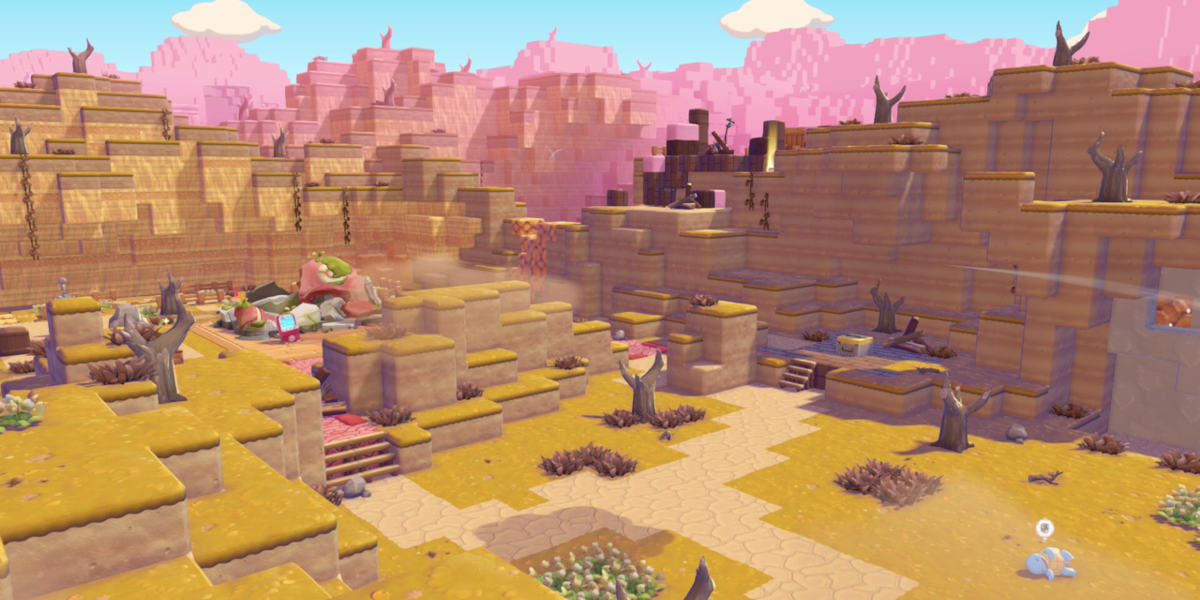
Released in March, Pokopia sees Kanto, the original setting of the Pokémon games, devastated by an unknown environmental catastrophe. The game begins without any humans – who fled to the safety of space – leaving Pokémon to clean up their owners’ mess. Though still authorial, the player is directed by a ‘professor’ Pokemon and must serve the needs of characters who explicitly state their desires. This includes designing homes and park spaces for Pokémon, investing in renewable energy and helping the ecosystem thrive. A typical play session may involve over 10 hours clearing volcanic ash from one area before moving on to another zone filled with rubbish, and then cleaning a polluted beach zone with water-based mechanics (a homage to Nintendo’s Mario Sunshine). Such mechanics introduce a democratic element to play, moving the genre closer to depicting a socialist game space.

A monthly dose of our best articles direct to your inbox
Video games have always been embedded in capitalism’s most destructive practices. Materials, used to make games consoles, fund armed conflict and slave labour in global south countries like the Democratic Republic of Congo. Supply chains are increasingly disrupted as waterways become congested with shipping vessels. And as artificial intelligence creeps into the games industry, so too does the medium become increasingly reliant on energy intensive data centres. Yet this is rarely evident in the games we play.
With Pokopia, the shadows of deforestation, climate change, pollution and the devastating impact of extractive capitalism, are made visible in our virtual refuges. Perhaps a cosy game needs to be confrontational to begin to truly represent socialist politics. We cannot truly escape, so we must work to save the world before us.

