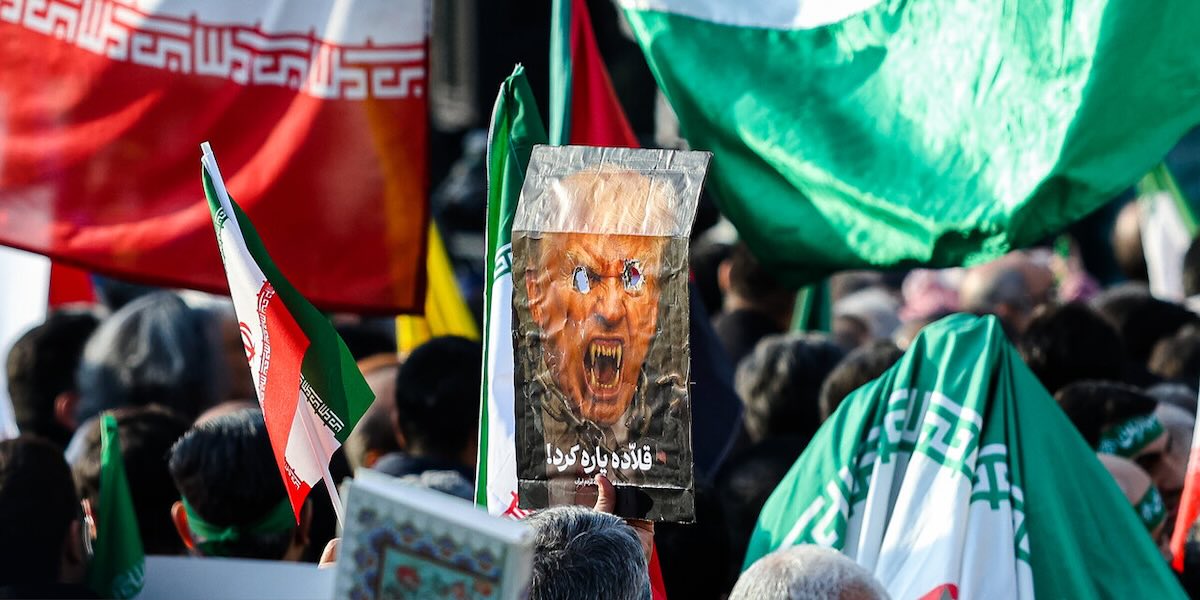
The past months have been extremely hard for the Iranian people. Earlier in the year, popular protests were met with extreme repression, a fact the Iranian president recognised and expressed ‘shame’ for. At the same time, they suffered from foreign aggression at the hands of Israel and the United States – with little hope that the ‘memorandum of understanding’ will bring lasting peace.
Many voices focus on one of those two aggressions, downplaying the other. Is it true, however, that these two ‘freedoms’ represent the only choices for Iranian society?
The Iranian Tanide collective is a platform for disseminating and reflecting on the voices of independent feminists living in Iran and around the world. They recently published a ‘No to War’ statement that expressed a third path for true liberation and democracy. Here, four members of the collective expand on those thoughts.
Alain Alameddine
How are things in Iran? What is the media not reporting?
Tanide
What is often underreported is the entanglement of domestic repression and external geopolitical aggression. Civilian populations are going through economic crisis, inflation, political repression, monetary instability. External sanctions and military or strategic pressures are frequently framed as solutions or interventions, but in practice, they intensify precarity for ordinary people.
Media sources are highly polarised. The state-controlled media broadcast propaganda, such as military victories, while media aligned with US-Israeli political interests present highly misleading narratives, such as mistranslating Trump’s ‘return Iran to the Stone Age’ as ‘return the Islamic Republic to the Stone Age’. Even when they reflect reality, they reflect only fragments of it.
AA
How does all of that make people in Iran feel?
T
The fact the country functions without major disruption and is capable of defending its sovereignty in the face of foreign imperialist aggression is a source of reassurance for many – but it is disappointing for those who may have seen this moment as their only chance to overthrow the regime.
The most recent crackdown on protests across Iran, with a death toll exceeding thousands, remains an open wound.
Meanwhile, the internet blackout shows a shift toward the total securitisation of communication. The lifting of restrictions is only partial. Many users continue to face limitations on their platforms and online activities, while punitive measures and extensive filtering remain in place. More troubling, however, is the extent to which internet shutdowns have become normalised: with virtually every crisis, whether internal or external, the government moves swiftly to restrict access and monopolise channels of communication.
The US/Israel and the Iranian regime are co-producers of the same trap: you are either with us or with them
Equally alarming is the threat, published in Iranian state media, to assert control over the subsea cables that pass through the Strait of Hormuz. As a result, the internet itself has become a strategic battleground, profoundly shaping the ability of ordinary people and civil society to communicate, organise and access information.
AA
What do you think the US and Israel’s aims in Iran are?
T
There are several goals, and those of the US do not entirely coincide with those of Israel. Israel seems to be interested in a very weak and destabilised Iran which could be either divided or embroiled in civil war. Although not a goal in itself, regime change would weaken Iran and allow them to curb its nuclear ambitions, missile plans and regional power.
But this aggression needs to be situated within broader regional and global dynamics: the United States’ concerns over its declining global hegemony and its competition with China and Russia, as well as Israel’s efforts to consolidate a regional coalition to secure its dominant position through its genocidal will. It also is part of a broader authoritarian turn within global capitalism, alongside the rise of reactionary nationalisms across the world.

A monthly dose of our best articles direct to your inbox
AA
How has the aggression affected Iran? Has it changed people’s perception or position on the regime?
T
Although the Islamic Republic had lost substantial legitimacy among the general population, the ‘rally around the flag’ effect has reinforced cohesion among loyalists.
However, there is a third position – one that has consistently opposed both war and the regime’s oppressive nature, while insisting that people must determine their future through their own movements and collective action, and resist any normalisation of foreign intervention.
Within Iran itself, independent organisations such as the Iranian Teachers’ Trade Association (ITTA), labour activist networks, and bar associations remain active among the few autonomous voices advocating for justice, democratic rights, and social accountability while simultaneously rejecting foreign intervention and militarisation.
AA
Some claim that now is not the time to talk about the regime’s oppression, as it justifies the invasion. How do you view this?
T
Iran has been the target of illegal and aggressive attacks, and it has the right to defend itself. At the same time, the Iranian regime has not historically been a force for peace in the region. So regarding the dichotomy I would say: Neither with foreign aggression nor with the Islamic Republic.
It’s important to recognise that the United States and Israel did not launch military attacks on Iran because the Iranian state is authoritarian or oppressive. Neither of them are interested in freedom! Furthermore, the authoritarian character of a state does not grant other states the right to use military force against the country. Therefore, discussing the Islamic Republic’s repression cannot logically be interpreted as justifying the aggression.
In my opinion we can never stop talking about the regime’s oppression. The recent massacre was just a few months ago. The regime has never stopped repressing its own people. We should also not forget the successive waves of popular uprisings across the region, including the Arab Spring and several uprisings in Iran and Turkey. The fact that all regional powers have aggressively repressed such movements should caution us against overlooking a key contradiction.
AA
What future do you envision for Iranian society?
T
In the short- and medium-term, I expect an intensification of repression. Iranian civil society appears to be at one of its weakest positions in decades. Even channels that once allowed for some degree of navigation within the political landscape have largely disappeared.
For example, the country’s largest and most influential charity organisation was shut down a few years ago – a move that effectively stripped society of an important civic capacity to sustain and repair itself independently of the state. Similar patterns can be seen in the treatment of teachers’ union activists and other segments of civil society.
AA
How can Iranian society, both within their country and outside, shape that future? How can those who support freedom and democracy for Iran help achieve it?
T
Immediate efforts could be focused on economic hardships and on Internet access. But political efforts are key. Although they are enemies, the US/Israel and the Iranian regime are co-producers of the same trap: you are either with us or with them. This is not accidental. Both poles benefit from the binary, because it eliminates the political space where a genuine emancipatory alternative could breathe.
So it is important to resist this binary. The third path must work harder and speak more clearly than either side. It is the only honest political position because it is the one that refuses to make the suffering of people into an instrument for either pole’s power. That is precisely why it is so hard to build. And precisely why it matters.
In terms of media and activist platforms which deserve support, several operate primarily in Persian, including Harasswatch and Naghd. Others are more deeply embedded in transnational activist networks, such as Feminists for Jina – an international feminist network – as well as the Slingers Collective, the Roja Collective, and the Woman Life Freedom Collective.
AA
Finally, how can people outside Iran engage with Tanide to spread the word?
T
Tanide Collective is always eager to connect with activists, organisers and advocates for justice across the globe. You can learn more about our work through our website. Any effort to share our content is valuable support, and we would welcome cooperating with other collectives, journals or organisations.
This is an edited and updated version of an article first published on the Tanide website
