
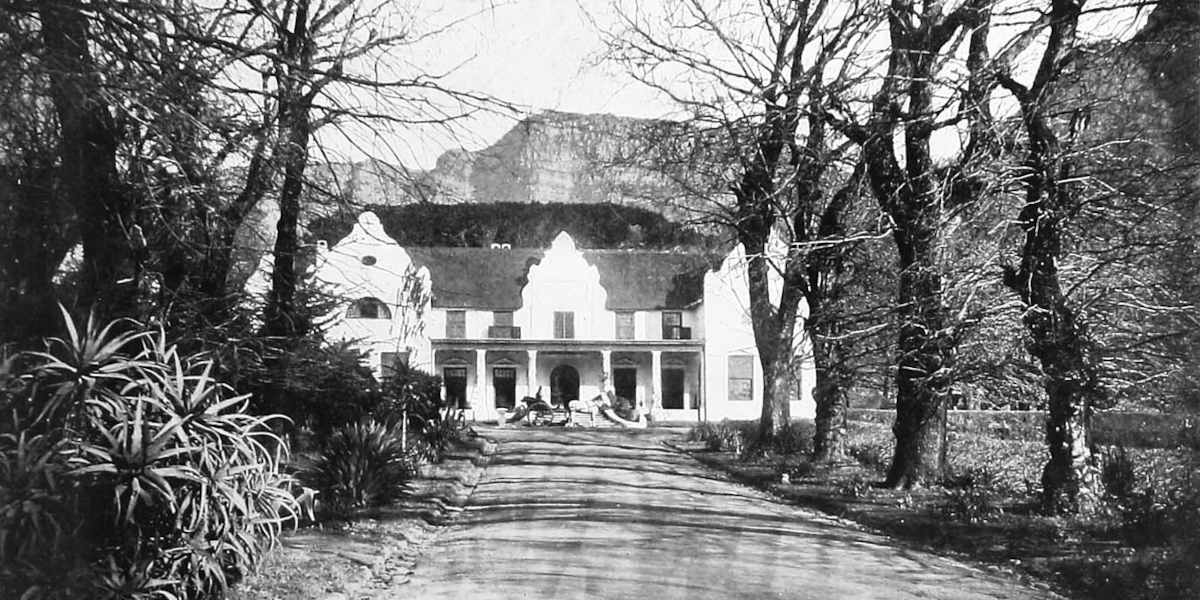
Cape Fever by Nadia Davids is a slim, slow-burning gothic tale set in 1920’s colonial South Africa, where every day routines erode into unease and subtle manipulations accumulate.
Nineteen-year-old Soraya Matas lands a job at the residence of an elderly English widow, Mrs. Alice Hattingh. On paper it is an ideal arrangement: live-in maid, good wages, and one Sunday off a fortnight. In reality, it is a slow suffocation. The relationship is a microcosm of the racial and class hierarchies Davids knows intimately, drawn from her family’s history.
The novel is dedicated to Davids’ Cape Malay grandmother and great-grandmother, both of whom worked in domestic service. Cape Malays are descendants of enslaved Muslims from Southeast Asia, brought to the Cape by the Dutch East India Company from the 17th-century. By the 1920s, under Union rule, Cape Malays endured economic exclusion and social hierarchies that mirrored the domestic power imbalances Soraya navigates.
Soraya’s days are filled with endless toil. Everything must be kept ‘just so neat, tidy, precise’ under Mrs. Hattingh’s watchful eyes. Time blurs into a monotonous rhythm and her days collapse into incantation: ‘good morning, wake, tea, tray, jam, curtains, wipe, move, cook, thank you, sweep, thank you, tidy, polish, scrub, I’m coming, weed the garden, tea, good afternoon, scrub, polish, sweep, wash, dry, fire, fire, fire, please, I’m sorry, I’m coming’.
Madam vs maid
The book unfolds as a psychological duel between madam and maid. Soraya obediently serves and intently observes, then chips away at Mrs. Hattingh’s upper-class facade by making her knowledge of the household’s financial decline felt. The widow meanwhile colours her conversation with casual racism. Most telling when she glosses over slavery’s brutality to assume a shared kinship: ‘You are not really from here either. Yes, yes brought by force where we came by design but still, like us, your kind made this colony what it is’.
Once a week, for an hour, the duelling takes on a new dimension. Soraya is invited to sit in the study and dictate letters to her fiancé. Assuming Soraya is illiterate, Mrs. Hattingh offers her pen with the serene certainty of a benevolent patron. Judging Soraya’s speech ‘too simple to be interesting’, she promises to capture her feelings and elevate her words ‘from the banal to the lyrical’.
These flourishes turn into a slow, insidious theft of Soraya’s voice. It’s that old, arrogant belief that a marginalized voice is a ‘broken’ thing needing correction. One thinks of J M Coetzee’s Foe, where Daniel Foe reshapes Susan Barton’s story with similar smug assurance. While Coetzee’s novel is metafictional and philosophical, Davids’ is much more intimate and domestic. In this narrow angle of voice appropriation however, the unease overlaps. Soraya perceives it with clarity: ‘by my voice I am me; by her hand, she is too’.
Cape Fever resonates sharply with ongoing struggles of exploited migrant and domestic workers and the legacies of empire
Davids layers this asymmetry into the very ink on the page, by pitting the Arabic calligraphy against the English cursive. Soraya’s father writes rakams on rice paper; Qur’an verses flowing right to left in devotion. They functioned as talismans of faith and protection for the Cape Malay community. A way for them to hold on to their identity when colonial bans on literacy and apartheid pressures tried to strip them away.
Mrs. Hattingh’s English hand flows in the same direction as her conquering empire. It presumes the right to correct and improve. Moreover, to claim. Right-to-left versus left-to-right. Spiritual inheritance clashing against imperial progress. Davids doesn’t draw the reader’s eye to the opposition. She simply sets the two scripts across the page and allows the quiet tension to remain.
‘Always keep something back’
Soraya’s refusal to reveal that she can read is just one example of withholding. Mrs. Hattingh uses silence and selective disclosure as a powerplay, manipulating Soraya’s understanding to keep her tethered to Heron Place. Soraya’s silences are acts of preservation rooted in maternal wisdom. ‘Always keep something back’, her mother cautioned, ‘one face for them, another for us’. Most tellingly, she refuses to share the significance of Noorul Mubeen shrine with her employer, declaring that those who ‘hold sway over our outsides’ have ‘no right to know, to touch, what is in our insides’.
In rare, vivid bursts, the prose breaks free and breathes more easily by slipping into long rhythmic catalogues. In describing the Muslim Quarter’s layered scents, ‘…the reek of chopped onions, pressed garlic, scattered methi, diced chilies, dried bay leaves; of spices-whole, roasted, ground, cast in hot oil, and of meat braising, bones boiling, fat spitting, broth cooking, sugar burning, rose water steaming…’. For a novel marked by restraint, these musical eruptions spill across the page with exuberance that mirror the traditions of preservation explored earlier: life, smell, sound, and memory refusing to be ‘just so neat, tidy, precise’.
Only Soraya sees the Gray Woman who offers her counsel and comfort during her strained stay at Heron Place. Davids turns these spectral visits into manifestations of historical injustices in a land marked by slavery and segregation. These women, as there are many of them in the colony, are not described as ghosts, but as ‘score settlers, debt collectors, anger gatherers’. The colonial archive ‘grayed’ out their grievances, and the South African public memory still struggles to integrate. The cry that breaks through, ‘Amok! Amok!’ in the novella’s climax is the historic slaves’ call to run free, set fire to oppressors’ edifices and refuse the silence once imposed.
Subaltern gothic
In excavating these buried histories of enslavement and voice theft, Cape Fever resonates sharply with ongoing struggles today: exploited migrant and domestic workers from the Global South and the unfinished work of reckoning with empire’s legacies in post-colonial societies.
Cape Fever uses the genre’s obsession with buried secrets to insist on the visibility of historical wounds. The haunted house becomes the colony in miniature. The Gray Woman reflects a collector of colonial debts. The withheld word becomes a site of both conquest and resistance. The dictation and the clashing scripts, the prose’s eruptions and its restraint, reveal how the act of speaking and withholding becomes a reckoning with empire’s enduring reach.

