
Why is the UK always so surprised by racism?
Every year or two or three, we see some eruptions of violent street racisms, perhaps a mobilisation by an explicitly racist group or party, and part of the commentary always contains an element of purported surprise. ‘How un-British. Where has this come from? This is not who we are!’
Of course, I understand the importance of asserting that this is not who we all are. I don’t think the question of racism is decided in British society. I certainly think that in my lifetime, I have seen many more people come around to a militant anti-racism, and it has become possible in many spaces of the left to talk about countering racism as part of our core programme. Much of this was not possible when I was younger. However, even in this period of expanding support for an active anti-racism, there are some serious limitations to mainstream debate in Britain.
Why do we think of racism as a moral question?
I thought we would be over this stumbling block by now, but if anything, it seems to have re-emerged with greater vigour. Again, I understand the importance of calling to people’s personal commitment. I also understand that many good comrades regard their commitment to anti-racism as part of a form of secular religion, an assertion and commitment and promise of what humans can be with each other and to each other. However, it is all but impossible to frame racism as a kind of moral test and not reduce its workings to matters of individual conscience or prejudice.
Despite all we have learnt about the machinic workings of racism, the moral frame leaves us acting as if it is just a matter of good and bad people. In the process, we recentre something like the ignorant or morally reprehensible racist as the target of our anti-racist politics. Sometimes we might still think that we will change their minds, more often now we might think that we will counter them.
I do not deny that it is important in the short term to counter organised violence and its racist impacts. However, understanding racism as something that Good People do not do (and that is surprising because it is outside our imagined national civility) works to depoliticise our ideas of what racism can be. Depoliticisation is always a mode of demobilisation.
To fail to understand racism as a political question is to accept the idea that nothing much can be done.
Why does even the left naturalise racism?
The idea that humans just are racist, that there is actually something different between different groups of us and that we must teach people to tolerate such differences, is a form of ideological warfare. When we give space to the supposedly understandable resentment of some communities – white, settled, forgotten, left behind – we have inserted a model of race science into our understanding of social relations. This is a way of seeing the world that assumes that people are already organised into racialised groupings, so that when resentment arises, it is mediated through these imagined boundaries between groups.
As we say these things, we reveal that really we believe that race is the organising logic of the world. Perhaps we even believe that white Britons have been put upon, that people have seen ‘their neighbourhoods’ change too much. Actually, we have little way of knowing which aspects of people’s lives are understood by them as racialised. Yet in the face of anger about the experience of, say, living in spaces with few shops and fewer services, or with ongoing health problems and too little money and support, or a fear of random violence alongside increasing physical frailty, the left acts as if the question and challenge must be ‘whiteness’.
Some advocate for ‘listening to grievances’ and others argue for ‘political education in structural causes’, but nearly all assume that resentment is a form of racialised political expression. If we cannot dismantle the logics of a naturalised racism in our own analysis of what human social relations are and can be, we have little hope of building a new world, anti-racist or not.
We must dismantle the logics of
a naturalised racism to build a new world
In fairness, recent years have seen a concerted attempt to reposition British racism within the longer histories of empire and slavery. It is undoubtedly true that the particular textures of racism in the UK carry the traces of these violent histories. However, these understandings, despite their importance, can also work to naturalise and exceptionalise British racism. Again, I often hear from close friends and comrades how very racist this country is, as if this is a cultural trait that can be measured and hierarchised, and as if there is some other space of different tolerance.
We need to think of racism not as a cultural attribute, even one arising from violent histories of dispossession. We need to act as if racism is not an inevitable part of the landscape, as inescapable as the weather. And to do this, we need to think politically again about what we mean by racism, what it does and what we should do in response.
What if it doesn’t matter what people believe?
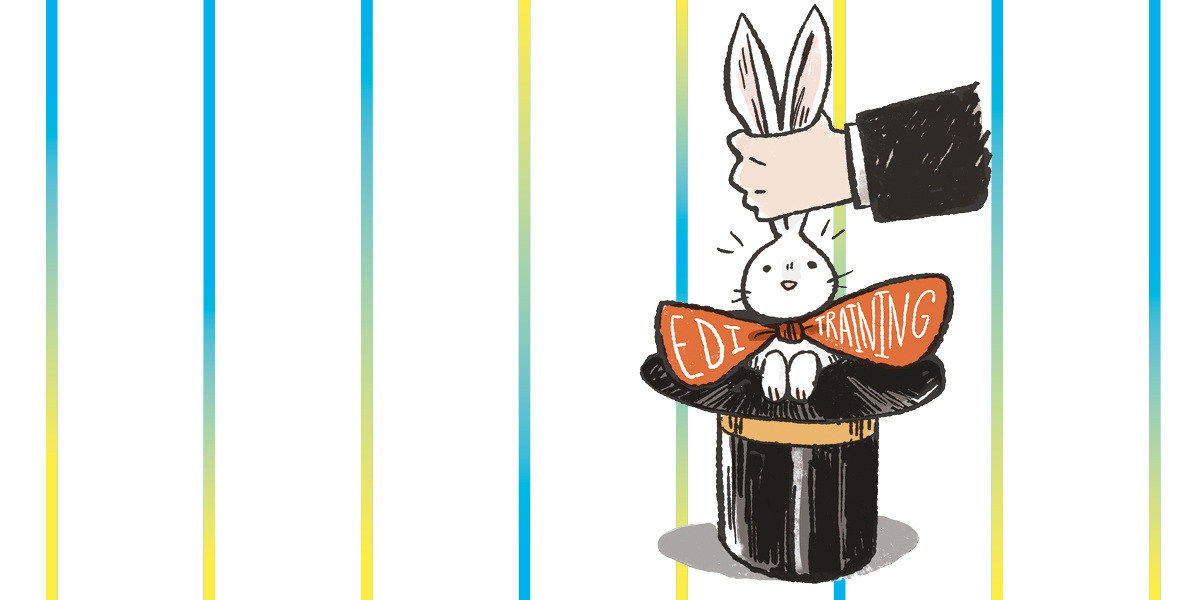
We have been going around this circuit since the 1980s. The writer and activist Ambalavaner Sivanandan, among others, warned against the diversion of anti-racism training. Today it may well be that many supposed racists in the UK do not actually hold racist views as we have understood them. As others have pointed out, people are contradictory. They may not harbour deep hatreds. They may not be in need of greater cultural understanding. They may belong to multicultural families and social networks, and yet they may be supportive of political programmes that include violent racism as a key technique.
The other side of this is to think again of what we expect to happen if and when we do change what people believe. The idea that racism arises from unfortunate or mistaken beliefs leads us back into a pretence that these violences happen either through ignorance or through a tacit acceptance or support for state racisms.
Racism is a political project undertaken as a mode of pursuing interests and shaping outcomes
I suppose the idea is that if we change what people believe freelance racists will stop doing it and supporters of electoral racism will change their vote.
This is a framing that reduces racism to a kind of discrete policy option: you choose racism, I choose recycling. But it might be more useful to understand racism as one of the logics informing the possibility of politics – including by placing some things as beyond the scope of politics and therefore immune to change.
The mythologies of race present the world as organised into distinct and separate categories of people, with allegedly inevitable and insurmountable differences. In this logic, some things cannot be changed ‘because people are just different’. Naturalising race softens us up to accept that nothing much can get any better for anyone.
What if racism is not any worse than it has always been?
I will try to modulate my voice, but this causes me rage. It is, of course, linked to the idea that racism is a very surprising event in a good-mannered country such as this. It is also a way of thinking of racism as an anomaly that may increase at some times of crisis.
To think in this temporal way, as if racism is increasing and must demand a response from us because of this increase, also serves to depoliticise our understanding of what racism is. We become transfixed by the idea of an extreme, violent, imperial racism that can only constantly remake itself in every moment and is seemingly impervious to political amendment.
Or we have a fantasy of a relatively functioning liberal democracy in which eruptions of extremist racism disturb an otherwise civil and tolerant social contract. In times of crisis or when right populists are more effective, there is an escalation of racism, and we must address that, presumably, by seeking to return to the civility that has only been recently lost.
What if we think of racism as primarily an exercise of power? What if we stop trying to convert ‘racists’?
For what it is worth, my reading is that racism has been a central dynamic of British society throughout my lifetime, but with differing formations and playing out through different terrains. I actually think that everyday life in the UK in this moment is somewhat less racist than I have known it to be, but that the state and current overnment are more openly, violently and intentionally racist than any elected government in my lifetime. My hunch is that neither of these phenomena is the outcome of a national context alone, and that they certainly are not national traits.
My not very imaginative but honestly felt view is that we should consider what becomes possible if we really thought of racism as primarily an exercise of power. To do this, we would have to temporarily park much of what has passed for an analysis of racism in recent decades. We would no longer look at what people believed about each other. We would not think (much) about how the tropes of racism are circulated or made. We would not think of racism as residing in anyone’s views. Instead, we would start our political analysis by looking at how violence, expulsion, degradation and disentitlement happen, and how the techniques of racism enable these practices, and not only against those marked as racially minoritised.
We need to try to understand racism as a mobile set of techniques that enable social control, popular violence and the coercive state in our time. We need to understand together what racism can do, not as if we are surprised that anyone could believe such things, but because we see that racism is a political project undertaken, sometimes explicitly and sometimes as an adjunct to a broader project, as a mode of pursuing interests and shaping outcomes.
What I hope could arise from this change in emphasis is an anti- racist politics that does not try to convert supposed racists. Perhaps an anti-racist politics that does not look to root out a racism imagined as a discrete and anomalous canker as the first task, but instead an anti-racist politics that tries to mobilise around the many ways in which people’s lives are broken. Because without understanding racism, we will never make something else.

