
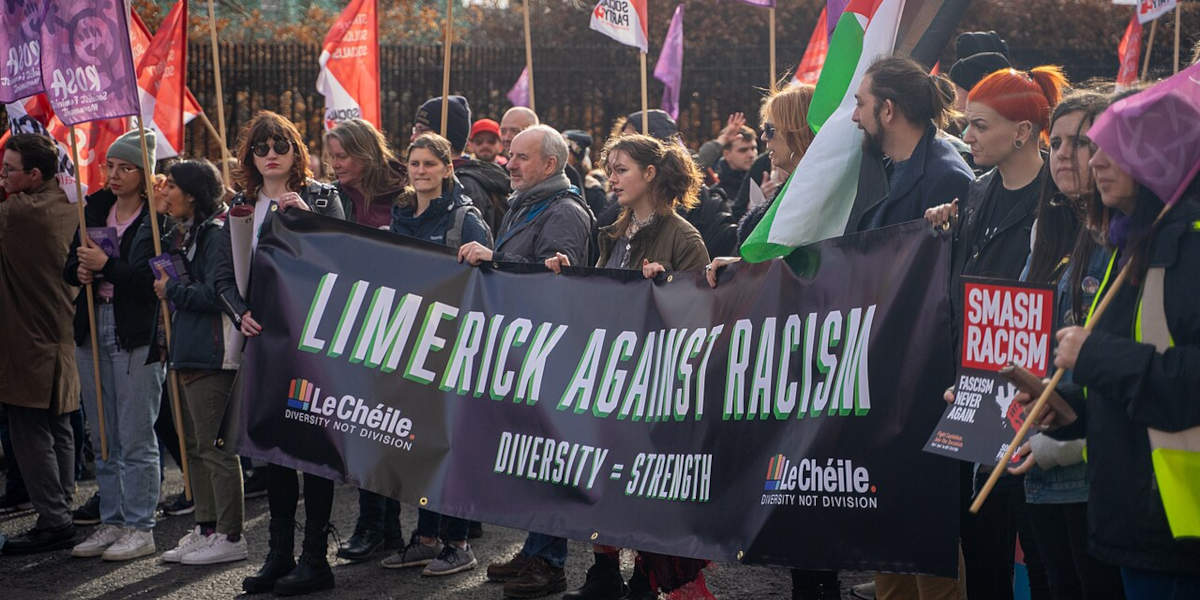
In recent years, black people and the wider community of people of colour in Ireland have been gaining success in all aspects of Irish society. Yet there still seems to be a denial of who we are. We are Irish – but not to those who can’t see beyond our race.
There are still lots of stereotypes surrounding black people in Irish society, and we are often reduced to poor and helpless beings in search of a handout. These tropes often make it into the corridors of power. Noel Grealish, Irish TD (MP), recently called African asylum seekers ‘economic migrants’ who come to Ireland to ‘sponge off the system’. How and why do these offensive views persist in Ireland?
The pull of the Celtic Tiger
Inward migration to Ireland was at its peak in the late 1990s with people from all over the world seeking the potential in Ireland’s booming economy. For many years the reverse had been true. Irish people had left their homeland to find better lives abroad, both in living memory and historically. It is estimated that ten million people have left Ireland since the 18th century, and the potato famine is as much a story of mass emigration as it is of starvation and disease.

A monthly dose of our best articles direct to your inbox
So of course there was maybe an initial shock when immigration started picking up pace. The trends were covered prolifically in the media. Irish public service broadcaster RTÉ includes in its archives ‘Motivations to come to Ireland’ along with ‘Immigration: the changing face of Ireland’, which goes on to explain that ‘while emigration has always been a part of Irish life, Ireland has in recent years become a destination for immigrants. Economic, political, and social motivations have brought many nationalities to Irish shores, facilitated by a more open Europe.’
Of course, this does not negate the long history of people of colour in Ireland. Mixed-race people, Nigerian international university students and the singer Rachael Baptist are indelible parts of Ireland’s history but many seem to forget about these facts and lump all people of colour in the same category as recent migrants who came to Ireland for a better life and the associated ‘sponger’ rhetoric. I am reminded of the novelist Chimamanda Ngozi Adichie’s TEDx talk on the dangers of a ‘single story’. ‘Our lives, our cultures, are composed of many overlapping stories.’ She warns us that ‘if we hear only a single story about another person or country, we risk a critical misunderstanding’.
Afrophobia in Ireland
There is a high level of Afrophobia in Ireland. A 2009 Gallup survey for the European Union Agency for Fundamental Rights found that 73 per cent of black Africans in Ireland believed discrimination based on ethnicity or immigration was ‘widespread’ in society. In 2015, an Irish Network Against Racism report highlighted the disproportionate targeting of violence against African-Irish and those of African descent. They found that ‘specific incidents targeting people of African descent accounted for 30 per cent of the total reported cases’.
We are currently reduced to the label of ‘new Irish’, which is usually thrown at just about anybody that has brown, yellow or black skin
When I think back to my childhood, I remember those appalling Trócaire charity collection boxes and how the narrative around Africa was always focused on poverty. The idea of wealthy Africans remains difficult to grasp for some Irish people to this very day. Returning to TD Noel Grealish, in 2019 he falsely claimed in parliament that ‘€3.54 billion in personal transfers had been sent to Nigeria over the past eight years’. Finance minister Paschal Donohoe later verified that ‘CSO (Central Statistics Office) figures indicate that the money involved is between €17m to €20m per year’. Grealish knowingly played into the idea of Nigerians as ‘spongers’ and drains on the Irish economy.
Given Ireland’s long history of remittances sent from abroad, Grealish’s claims were hypocritical at best. Yet the prejudiced TD hinted that the money may have come from illegal earnings, demanding to know what checks are in place to ensure money going to Nigeria ‘is not the proceeds of crime or fraud’. Scarily, Grealish’s views are becoming mainstream. The increasingly prominent National Party certainly has fascist ambitions – its website states that ‘Ireland belongs to the Irish’ and ‘We believe in the Irish people, our right to exist as a nation and our right to defend and lay claim to our homeland. We seek an Ireland united, Irish and free.
Beyond Representation
There is a desperate lack of representation of ethnic-minority people in many different professional spaces in Ireland. In 2019, I co-founded Beyond Representation alongside Jess Majekodunmi and Zainab Boladale as a platform to celebrate the achievements of women of colour in Ireland.
The wave of BLM protests in 2020 seemed to spark many companies’ interest in diversity in the workplace. But ultimately the key to diversity is inclusion. Do not invite us simply because of our race; invite us to the table because we are great and happen to be a person of colour. Too often microphones are given to people of colour to speak on the one thing we all experience – racism. Many in the black-Irish community are given chances and invitations to spaces to speak on their trauma, particularly so after the death of George Floyd. And while it is undoubtedly important to continue these discussions on the problem of racism nationally and internationally, we want also to hear black people or people of colour speak about their successes in life. Why not give us a space to talk about our work and the great things we are doing to enhance Irish society for all?
Once we accept that we are all a part of Irish society, maybe we can move forward together. But we are currently reduced to the label of ‘new Irish’, which is usually thrown at just about anybody that has brown, yellow or black skin. When do we become just ‘Irish’?

