
Red Pepper
Tell us about your experience of recent campaigning and canvassing?
Anonymous, Labour
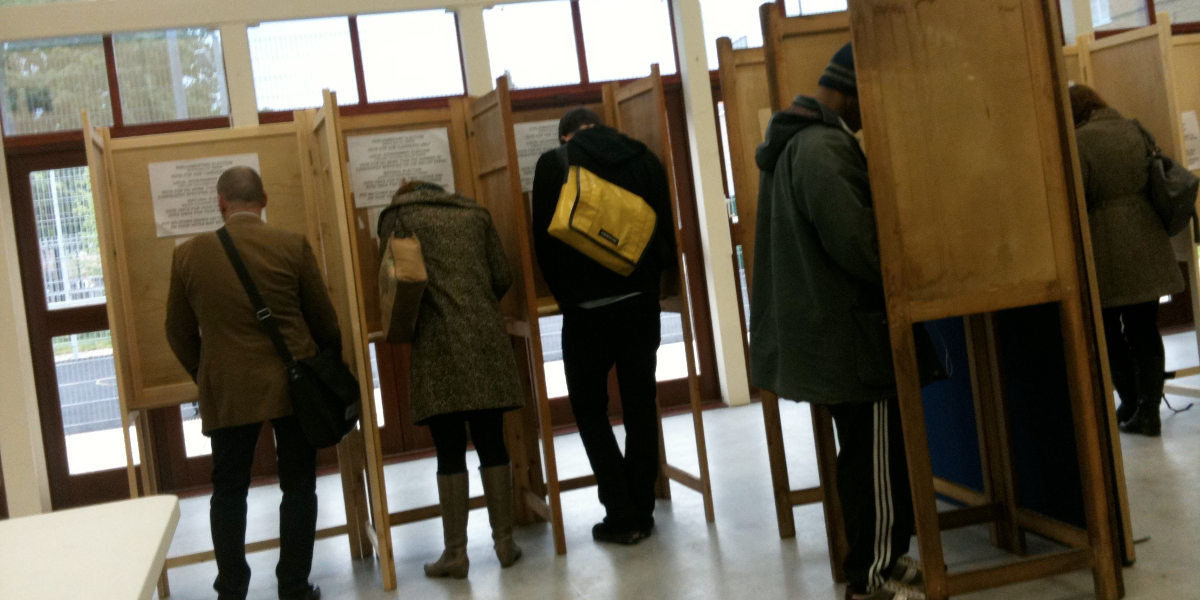
Five days before the Gorton and Denton by-election, I joined hundreds of Labour supporters in travelling from across the country to target people who in 2024 had voted Labour. The issues raised were similar to those in my local area: the cost of living, the NHS, particularly the difficulty with GP appointments, alongside the ‘illegal immigration crisis’ which was blamed for many of the problems caused by money not being available for services. Examples we could give of Labour’s work in new Employment Rights, increase in hours for free childcare, and new protection for those renting their homes, did not seem to register unless the individual had been directly helped. Social media, like Facebook, seemed to be a main source of information and taken at face value by many.
Tim Hunt, Green Party
The main thing that comes across is that people are largely either angry or disappointed. People talk about fly tipping and bins, littering and street cleanliness, parking and potholes. While these things might seem trivial, they are symptomatic of wider problems, of the lack of care people are showing to each other and are a daily reminder of the sense of abandonment that people feel.
Beth Winter, Independent
It’s been generally positive, in that people I am meeting are often keen to hear from me and my team and want to vote for the kinds of policies for which I am standing: on investing in public services, creating and retaining community wealth, bringing services back into public ownership, redistribution of wealth and power. Generally, people are raising issues around the NHS in Wales, cuts to public services, and, sadly, their loss of trust in politicians.
Dave Kellaway, Hackney Independent Socialist Collective (HISC)
HISC have been campaigning on a number of local issues even before they were formally constituted as a political party. Our councillors were prominent in supporting an inquiry into the problems with the Mossbourne group of academies whose behaviour management system was failing special needs and minority pupils in particular. Canvassing has shown that there is widespread distrust of all political parties and anger at Hackney Council’s lack of transparency. Housing is a massive issue: slow repairs, neglect of estates, leases and service charges are just some of the problems raised. Racism comes up regularly on the doorstep. People see galloping gentrification alongside neglect of public spaces; very little social housing being built and anti-social behaviour.
Jane Marshall, Broxtowe Alliance
We launched the Broxtowe Alliance in January 2025, after 20 Labour councillors broke from the group after being disciplined by Labour over means-testing of the Winter Fuel Payment and Labour’s response to Gaza. We were ahead of that curve, and we did speak out at the time because it was wrong, and our communities were telling us it was wrong. It wasn’t something we expected from a Labour government. Broxtowe has a mixture of demographics, so for elections we have to target our audience. We use the data [to identify and engage voters] and break down each section so that we can get down to the hyper-local, street by street. Every vote matters.
‘I want to see power back in the communities we are elected to serve, with people having control over their lives, and over the wealth created’
Red Pepper
How can the left make use of local and devolved government? What power, if any, do these bodies have that can be used to meet the needs of ordinary people?
Beth Winter, Independent
I sometimes think we are too focused on the machinery of government. I want to see power back in the communities we are elected to serve, with people having control over their lives, and over the wealth created. That is one reason why I have said I will not take a full MS salary – I will donate a proportion to developing community projects, with a particular emphasis on training and confidence building so that people involved in their communities can start to take back control. We don’t need career politicians, or those funded by absentee millionaires who avoid paying tax – we need [to support] mothers fighting to keep school transport for their children, health visitors demanding the fair wage owed to them, local community representatives fighting to keep their school open, community group members who are fighting food poverty, running not for profit local ventures.
Tim Hunt, Green Party
We can sort out the things people care about, and that goes well beyond left or right. While people might not be talking about intersectionality and macroeconomics, their lived experience – what they are concerned about and what they see as a system in terminal decline, unable to meet their needs – touches on so much of what the left is supposed to stand for. The council here has tried all kinds of things to do with local economic growth and revenue raising like housebuilding or attracting business, but in doing so they have totally neglected what people actually want. What we’ve learnt on the doorsteps is that they want cleaner and safer streets, but the political point is how you deliver this. Do you just flood the streets with police and CCTV, or do you work with frontline services and health and wellbeing practitioners?
Jane Marshall, Broxtowe Alliance
Social housing is our main priority. Last year we built, acquired and bought back more council homes than we lost to Right to Buy. We know we have to use our elected power to provide good, affordable, safe houses for our residents. We have the cheapest social housing rents in the whole of the East Midlands. Our new council homes are also built to the highest environmental standards, with Heat Source pumps, PV panels and have energy efficiency ‘A’ ratings – all to help reduce people’s energy bills. We also make sure each year we pass a no cuts to jobs and services budget. All of this matters to ordinary people, it’s tangible change.
Dave Kellaway, HISC
HISC councillors, if elected, will work for total transparency and serious participation of local people in what is deemed ‘council business’. HISC has been centrally involved in the campaign to ensure local development sites meet local people’s needs in terms of social housing and shopping facilities. They have campaigned against the closure of local primary schools and for an inquiry into the treatment of SEND students in some local schools. You can achieve some gains even in opposition – a party that has always been in power can get very complacent. For example, the landlord licensing scheme had been part of the local Labour Party manifesto but had been cast aside. Under pressure from HISC, they were pushed into implementing it. This scheme not only helps protect tenants but also provides resources for council services.
Red Pepper
How can representation in local or devolved government strengthen community campaigning?
Tim Hunt, Green Party
We need people who have a background in community action to get involved and start running for office. Too often councillors are too far removed from the people they are supposed to be helping – I think we should be breaking that dichotomy. With the Greens we’re doing this to an extent – most of us are campaigners or activists or doers. I run a community garden and local football team and am about to start campaigning around tech sovereignty with work.
Dave Kellaway, HISC
Three [Labour] councillors [who now represent HISC on the council] resigned from the Hackney Labour Group in 2024, claiming the group was ‘stifled by a lack of internal democracy, transparency and scrutiny and by an absence of progressive thinking at national leadership level’. Labour’s complicity in the Gaza genocide was also a major factor; Hackney Council had consistently blocked any motions that would remove its funds from investments connected to the Israeli apartheid regime and to end the twinning link with Haifa. These councillors, along with Green councillors, played a leading role in the local Palestine Solidarity campaign, backing up their work in the council chamber with lots of street activity, leafleting, picketing and protesting.
A couple of Saturdays ago I joined a group of local socialist activists who are campaigning to keep open a well-loved stationery shop which is threatened by a drastic rent increase. We got a surprisingly good response, with people saying we do not need another corporate takeaway or coffee shop. While Hackney Council seems to always be in the pocket of developers and big business, locally run independent shops are a vital part of what makes a community.
Beth Winter, Independent
Provision of free school meals to all primary school children didn’t happen in a vacuum, or because our Senedd suddenly decided it was a good thing to do – it happened because groups like the People’s Assembly Wales campaigned for it! And I called for it as part of that campaign despite attempts by an establishment political party to silence me. As an MP, I worked to develop our local trades council, I campaigned against cuts to our services and for free school meals for all children in Wales. I will continue to work in that way as an MS, using my position to build local community strengths.
Jane Marshall, Broxtowe Alliance
Representation in itself allows us to take community concerns directly to decision makers and lobby for action. As representatives, we are entitled to information and access to officers, as well as a seat at the table when decisions are being made. More than that, being the ruling group of the local authority allows us to build up a record of delivery – the difference we make is visible within our community. All of this helps us lead community campaigns outside of our council remit whether that’s for improved bus services, fighting against the far right, or simply better roads.
Anonymous, Labour
A striking comment repeated when canvassing was ‘that no one is listening’ to their problems, with the majority of problems mentioned related to the cost of living. The left could build on this area by focusing on communities and engaging in a real way with locals’ concerns. A process which gives local people the opportunity to raise issues, ask questions, receive factual information and have respectful dialogue would help in involving the community far more than 11th hour conversations on doorsteps.

